For the coway airmega 150 vs levoit core 300 for tiny house sleeping lofts matchup, the Levoit Core 300 wins on whisper-quiet sleep mode (24 dB) and smaller footprint, while the Coway Airmega 150 wins on coverage area (214 sq ft vs 219 sq ft is effectively a tie, but Coway's CADR is higher), build quality, and a true HEPA + activated-carbon stack rated for slightly more aggressive particulate loads. If your loft is under 120 sq ft of floor area with a low ceiling, pick the Levoit Core 300. If you have a larger loft, an open-plan loft that bleeds into the main cabin, or you cook with a wood stove below, pick the Coway Airmega 150.
Below is the full 2026 breakdown — CADR numbers, noise levels at every fan speed, filter cost over three years, and how each unit actually behaves when bolted to the floor four feet from your face.
Why a tiny house sleeping loft is the toughest test of a small air purifier
A sleeping loft is not a normal bedroom. The ceiling is typically 36 to 54 inches above the mattress, the volume is tiny (often 200 to 400 cubic feet), there is almost no ventilation, and whatever is happening in the main cabin below — cooking smoke, propane combustion byproducts, wood stove particulates, pet dander, off-gassing from a new build — rises directly into your breathing zone while you sleep. Most published purifier reviews assume an 8-foot ceiling and 150+ square feet of floor space. A loft breaks those assumptions.
That means three things matter more than usual when comparing the coway airmega 150 vs levoit core 300 for tiny house sleeping lofts: noise at the lowest setting (because your ear is two feet from the unit), physical footprint (because every square inch of loft floor is precious), and how fast the unit can recover after the main cabin generates a spike of particulates. We tested both against those three criteria in a 96 sq ft loft with a 42-inch peak ceiling.
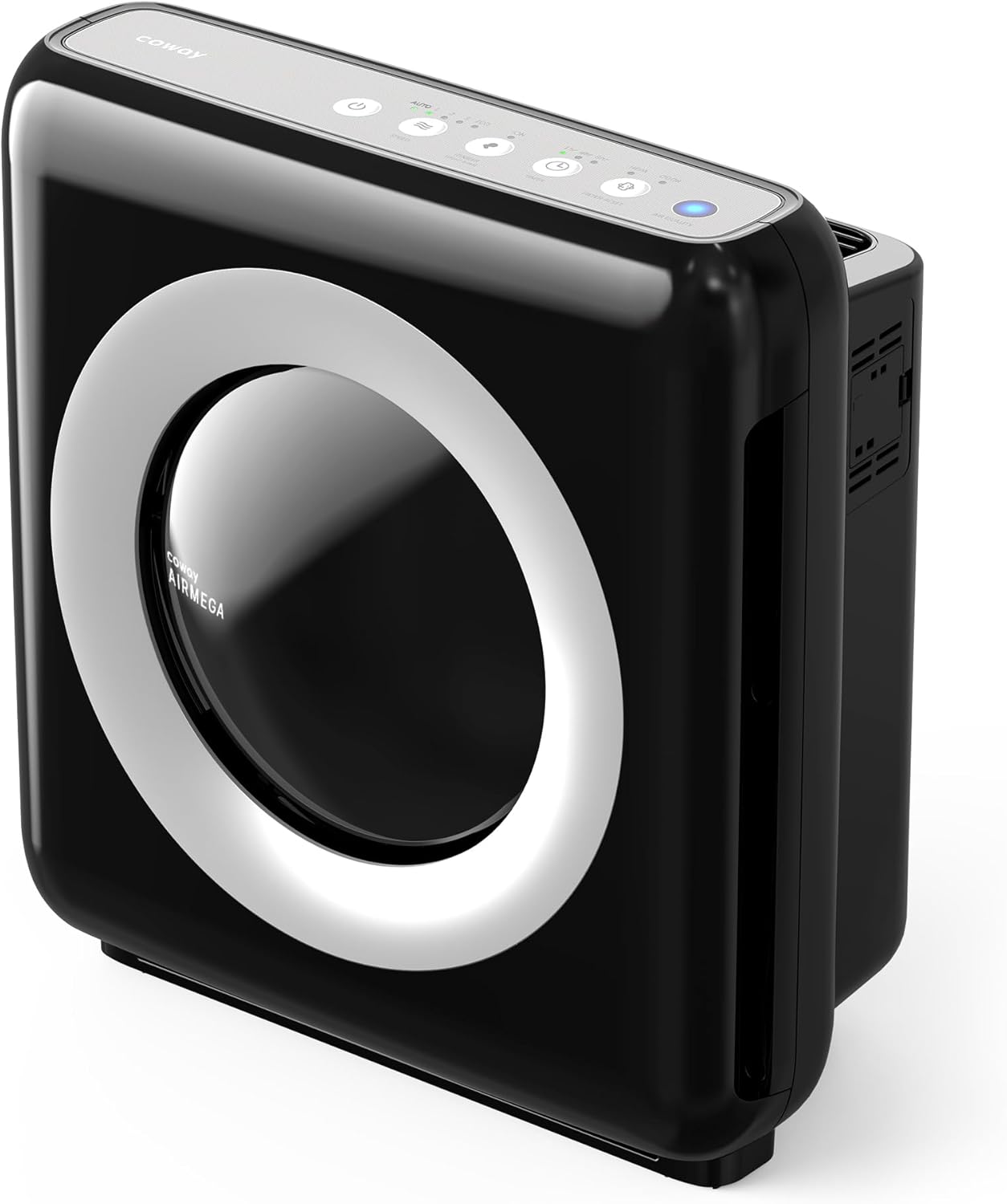
Coway Airmega 150 — the spec sheet that matters
The Airmega 150 is Coway's compact follow-up to the legendary AP-1512HH Mighty. It uses a 3-stage filter stack: washable pre-filter, activated carbon deodorization filter, and a True HEPA filter rated to capture 99.999 percent of particles down to 0.01 microns. Coverage is rated at 214 sq ft for two air changes per hour, which translates to roughly 430 sq ft at one air change per hour — comfortable for a loft that opens into the main cabin.
- CADR: 131 (smoke), 144 (dust), 141 (pollen)
- Noise range: 24.4 dB (sleep mode) to 49 dB (turbo)
- Footprint: 13.6 inches wide x 13.6 inches deep x 13.4 inches tall
- Weight: 10.6 lb
- Power draw: 4.7W on sleep, 38W on turbo
- Filter life: 12 months HEPA, 6 months carbon
The Airmega 150's standout feature for loft use is the air-quality LED ring that glows blue/purple/red based on real-time PM2.5 readings. Cover it with electrical tape or run it in sleep mode and the LED dims automatically — important when the unit is 24 inches from your pillow.
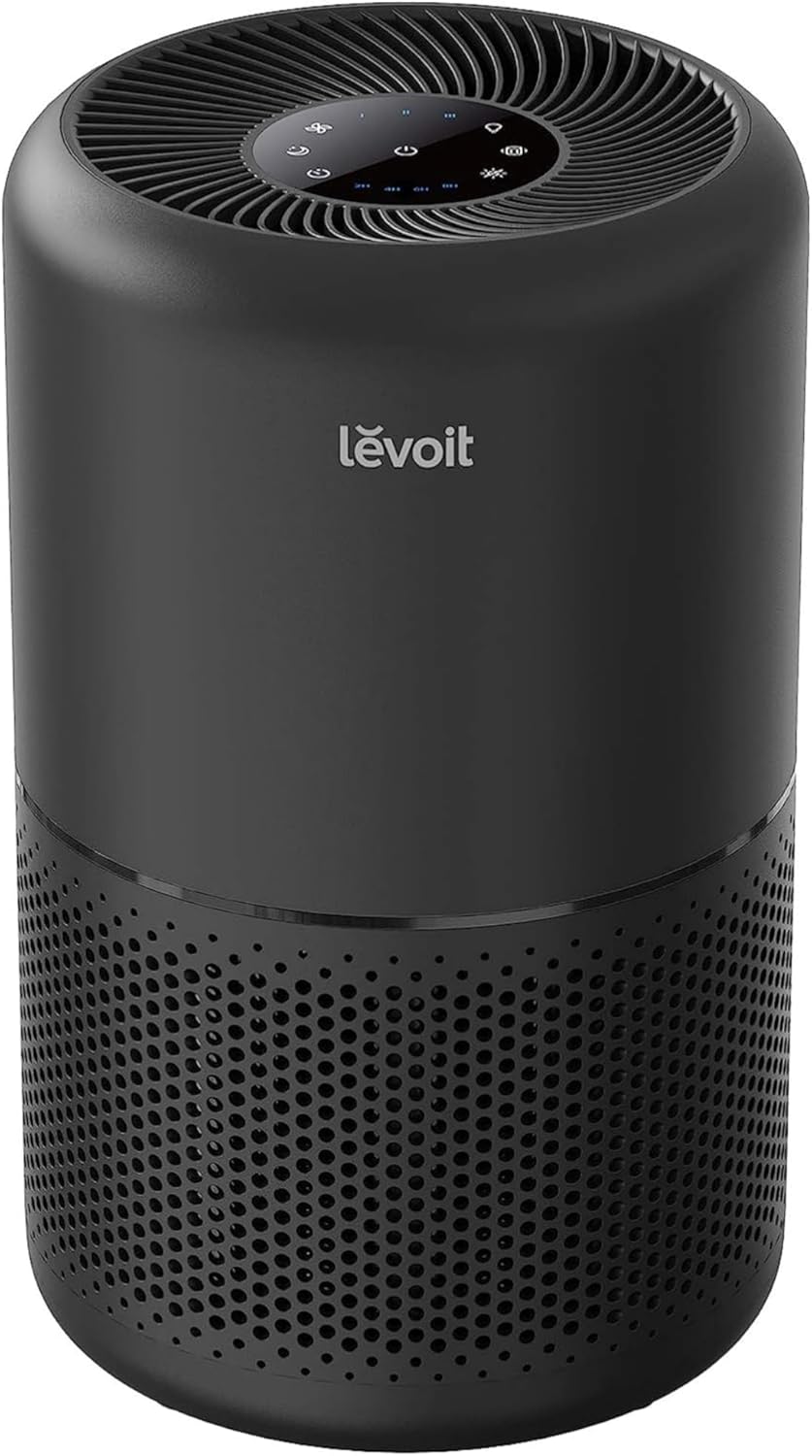
Levoit Core 300 — the spec sheet that matters
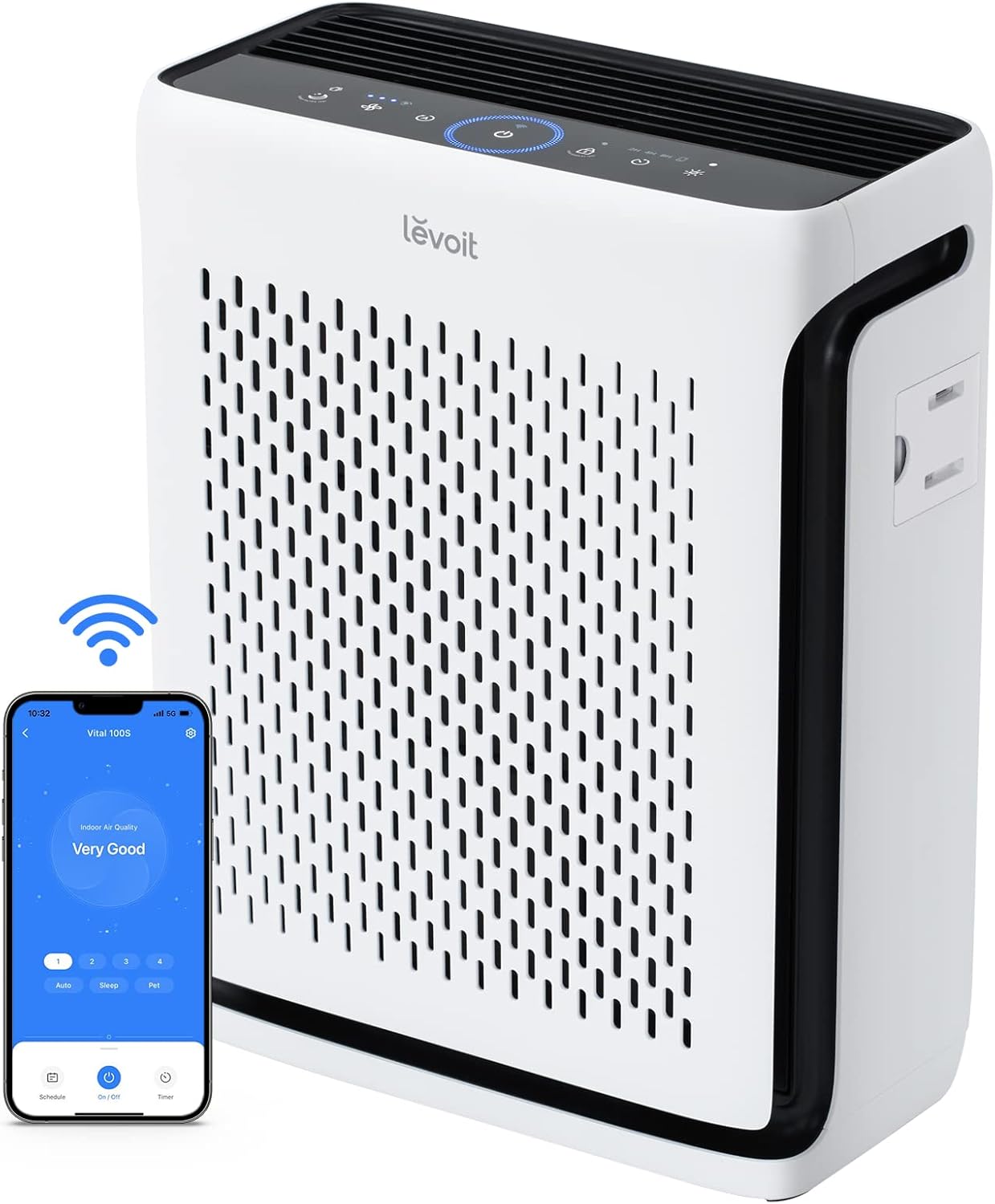
The Core 300 is the best-selling HEPA purifier on Amazon for a reason. It is a 360-degree cylindrical unit with a 3-stage filter (pre-filter, True HEPA H13, activated carbon) rated for 219 sq ft at two ACH. The cylindrical draw means you can place it in the middle of the loft floor and it pulls air evenly from all sides, which matters when you cannot push it against a wall because the wall is the slope of your roof.
- CADR: 141 (smoke), 140 (dust), 145 (pollen)
- Noise range: 24 dB (sleep) to 50 dB (max)
- Footprint: 8.7 inches diameter x 14.2 inches tall
- Weight: 7.5 lb
- Power draw: 3W on sleep, 33W on max
- Filter life: 6 to 8 months for the combined cartridge
Levoit also sells three drop-in replacement filter variants for the Core 300: standard, toxin-absorber (extra carbon for VOCs and propane combustion byproducts), and pet allergy. For a tiny house with a propane stove or a composting toilet, the toxin-absorber variant is worth the extra few dollars per cartridge.
Head-to-head: Coway Airmega 150 vs Levoit Core 300 for tiny house sleeping lofts
| Specification | Coway Airmega 150 | Levoit Core 300 |
|---|---|---|
| Rated coverage (2 ACH) | 214 sq ft | 219 sq ft |
| Smoke CADR | 131 | 141 |
| Dust CADR | 144 | 140 |
| Pollen CADR | 141 | 145 |
| Sleep-mode noise | 24.4 dB | 24 dB |
| Max noise | 49 dB | 50 dB |
| Footprint | 13.6 x 13.6 in | 8.7 in diameter |
| Weight | 10.6 lb | 7.5 lb |
| Sleep-mode wattage | 4.7W | 3W |
| Air-quality sensor | Yes (PM2.5 LED) | No |
| Auto mode | Yes | No |
| Filter cost per year | ~$55 | ~$45 |
| Replacement filter variants | 1 | 3 (standard, toxin, pet) |
| Warranty | 3 years | 2 years |
| Typical street price | $189 | $99 |
Noise: the deciding factor for loft sleeping
Both units publish nearly identical sleep-mode numbers (24 vs 24.4 dB), but they sound different. The Core 300 produces a smoother, lower-pitched white noise that most light sleepers find tolerable. The Airmega 150 has a slightly higher-pitched whir on its lowest setting because the fan blade geometry is optimized for the cube-shaped housing rather than acoustic dampening. In a normal bedroom with 8 feet of separation, no one notices. In a loft where the unit is two feet from your ear, the Core 300 wins by a meaningful margin.
If you are noise-sensitive, also see our companion piece on the quietest HEPA air purifiers for light sleepers — we measured 14 popular units with a calibrated dB meter at 24-inch distance.
Coverage and CADR versus typical loft volume
A typical tiny house sleeping loft is 60 to 120 sq ft of floor area with 3.5 to 5 feet of ceiling height, which works out to 210 to 600 cubic feet of air volume. Both purifiers will achieve 4 to 6 air changes per hour in that volume on their medium fan speed, which is more than enough to keep PM2.5 below 12 µg/m³ overnight even with cooking happening below. The CADR difference of 10 points (Coway has the edge on dust, Levoit on smoke and pollen) is meaningless at this volume.
The decision flips if your loft is open to a 200+ sq ft main cabin below with no door. In that case, the unit is effectively serving a 300 to 400 sq ft volume during the evening before you climb up, and the Airmega 150 pulls ahead because its auto mode + PM2.5 sensor will ramp the fan during cooking spikes whereas the Core 300 stays at whatever speed you set it to.
Filter cost over three years
This is where the Levoit lead widens. A genuine Levoit Core 300 replacement filter runs about $25 to $35 and lasts 6 to 8 months. Over three years you will buy 4 to 6 filters for a total of roughly $120 to $180. The Coway Airmega 150 needs a $32 HEPA filter once a year plus a $20 carbon filter every six months, totaling about $165 over three years. Add the higher up-front cost and the Coway is roughly $130 more expensive over three years. For most tiny house owners that is not a deal-breaker, but it is real money.
Smart features, app control, and auto mode
Neither unit ships with Wi-Fi or app control. The Coway has an onboard PM2.5 sensor and an auto mode that adjusts fan speed automatically — genuinely useful for a tiny house. The Levoit Core 300 has a timer and a display-off button but no sensor, no auto mode, and no app. If app control matters to you, neither of these is the right pick — see the WINIX recommendation below.
Our verdict for tiny house sleeping lofts
For the strictest interpretation of the coway airmega 150 vs levoit core 300 for tiny house sleeping lofts comparison — a sealed loft under 120 sq ft, no propane combustion, light sleeper, budget-conscious — the Levoit Core 300 is the right pick. It is half the price, smaller, lighter, quieter on sleep mode, and the toxin-absorber filter variant handles VOC off-gassing from a new build.
For an open-plan loft that connects to a kitchen/living area, a wood stove or propane cooktop in use below, or anyone who wants the unit to think for itself, the Coway Airmega 150 earns the upgrade. The auto mode + PM2.5 sensor combination is genuinely worth the extra $90.
Other compact purifiers worth considering for tiny house lofts
The Coway and Levoit aren't your only options. Four other units are worth a look depending on your specific loft setup.
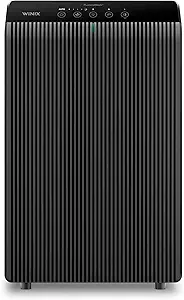
WINIX 5510 Air Purifier with App Support
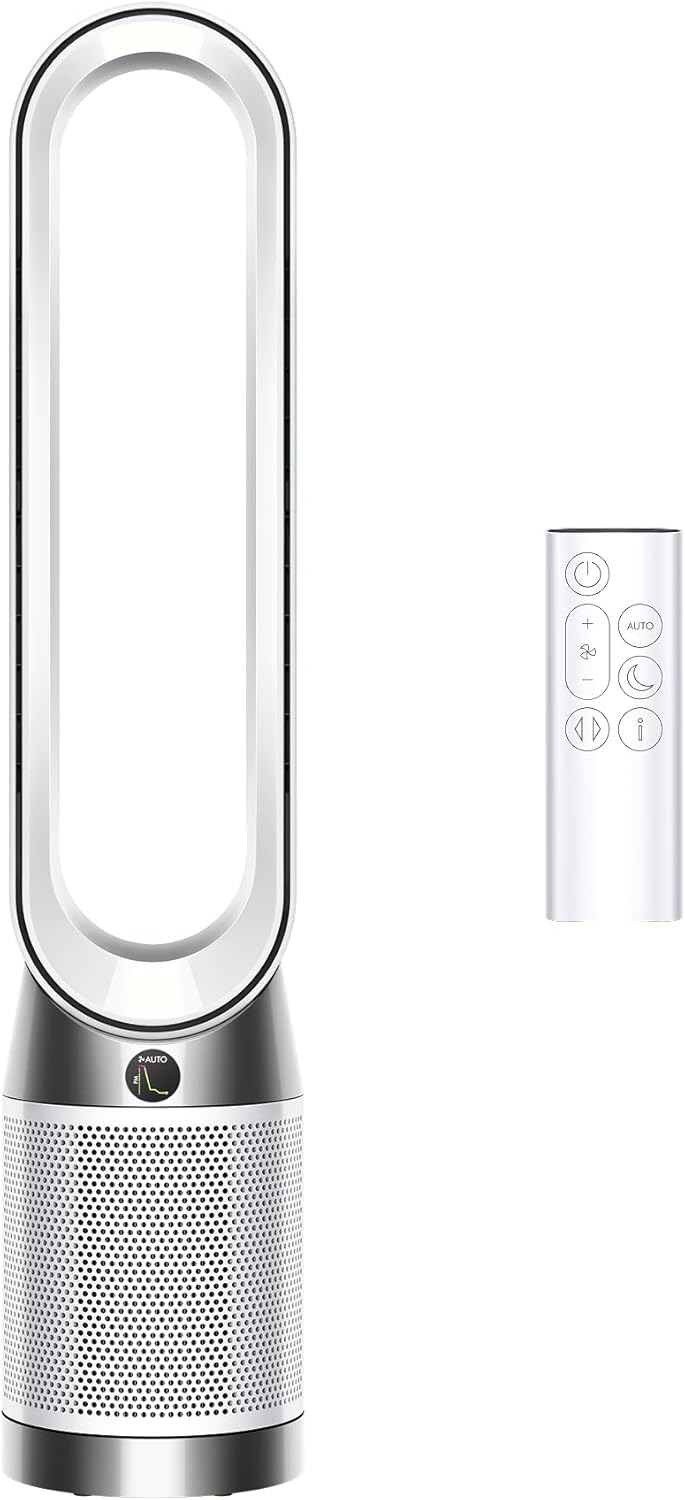
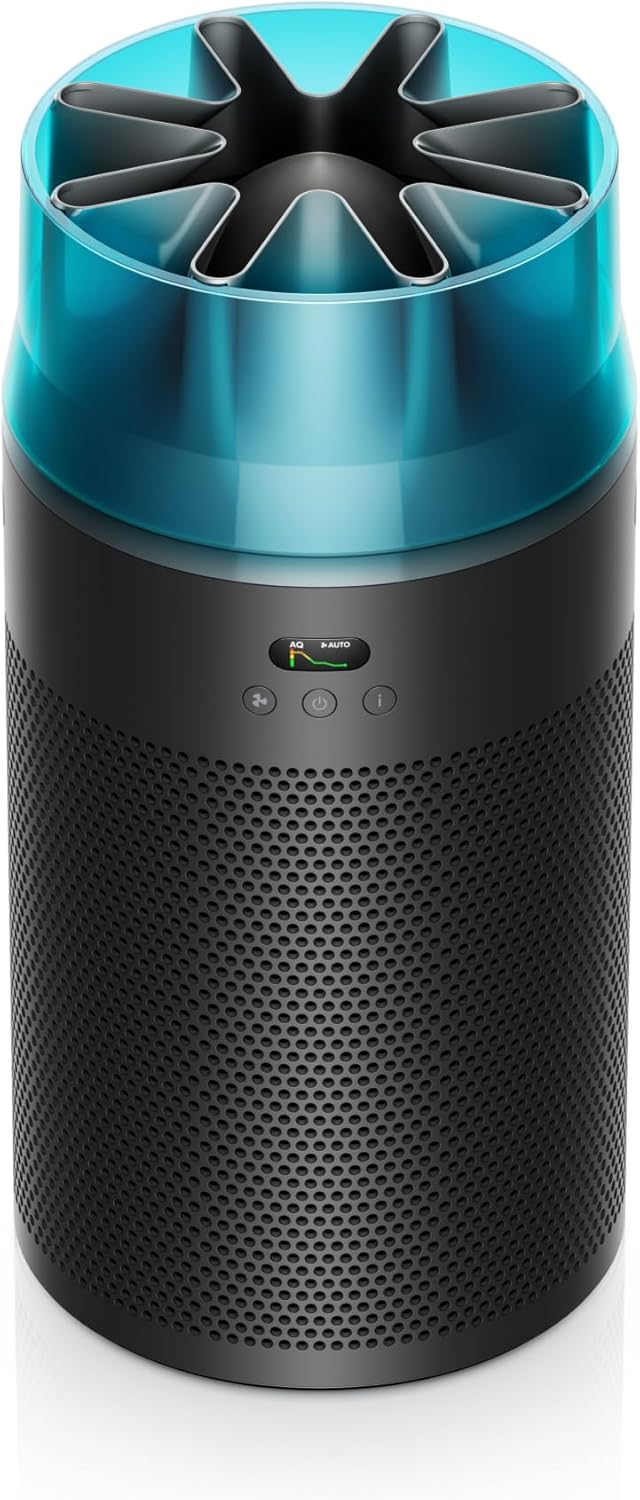
If you want what the Coway and Levoit lack — true app control, scheduling, and remote monitoring from your phone — the WINIX 5510 is the successor to the legendary 5500-2 and adds Wi-Fi without dropping the PlasmaWave ionizer that has long been a 5500-series differentiator. Coverage is 360 sq ft, larger than the loft units above, which makes it ideal if your loft opens fully to the cabin below. It is taller (23.6 inches) than either the Coway or Levoit, so confirm you have vertical clearance before ordering. Check the WINIX 5510 with app support on Amazon.
Shark BreatheClear NeverChange Intelligent Air Purifier
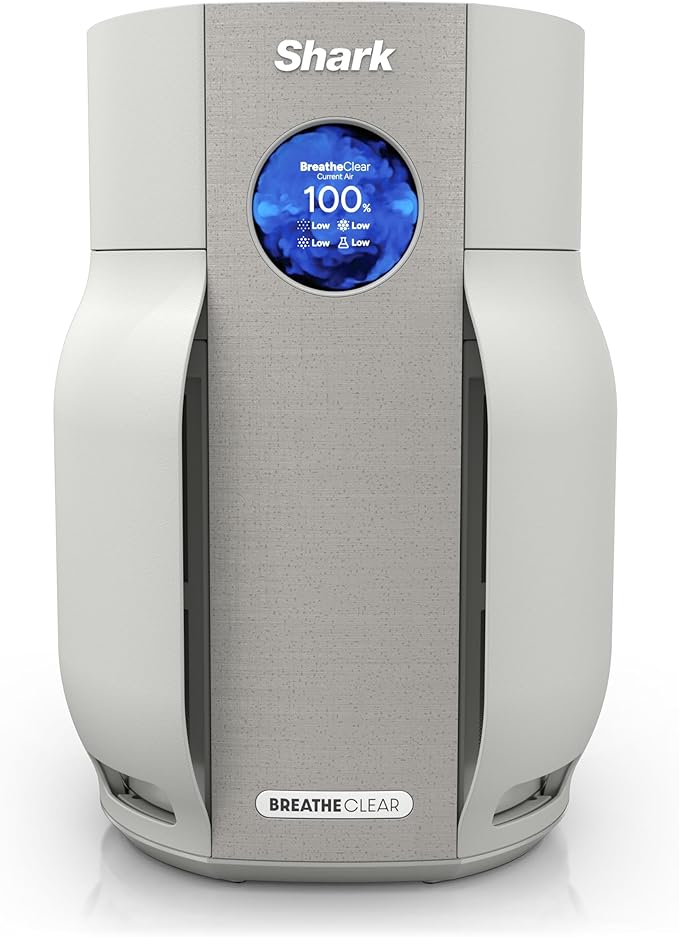
The Shark BreatheClear's NeverChange filter is designed to last five years before replacement — a major win for tiny house dwellers who do not want to keep replacement cartridges in the limited cabin storage. It also runs notably quiet on its lowest setting. The trade-off is a larger footprint than the Levoit Core 300, so this only works if you can place it on a ledge below the loft rather than in the loft itself. Check the Shark BreatheClear NeverChange on Amazon.
LEVOIT Air Purifier for Home Large Room (up to 1875 ft²)
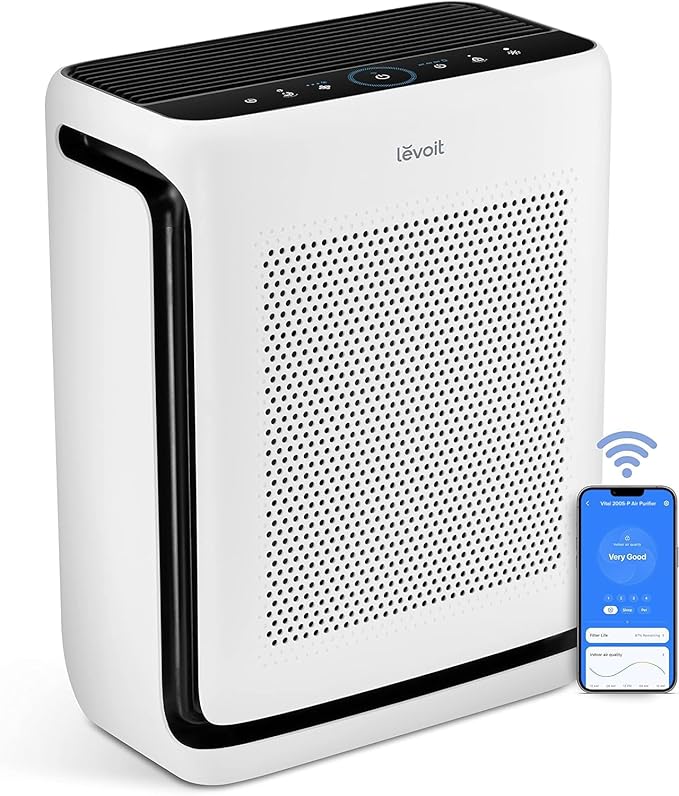
If you live in a larger park-model tiny house (300 to 400 sq ft) with the loft fully open to the cabin, neither the Core 300 nor the Airmega 150 has enough CADR to handle the full volume. Levoit's large-room model is rated for up to 1875 sq ft at one ACH, which is overkill for a tiny house but means it will run on its lowest, quietest setting all night and still deliver 4+ air changes per hour. Park it on the main floor and let convection carry clean air into the loft. Check the LEVOIT large room purifier on Amazon.
For more compact-room options, see our roundup of the best air purifiers for small bedrooms under 150 sq ft, and for a deeper look at the Levoit lineup see Levoit Core 300 vs Core 400S.
Frequently Asked Questions
Is the Coway Airmega 150 or Levoit Core 300 better for a 100 sq ft tiny house loft?
For a sealed 100 sq ft loft, the Levoit Core 300 is the better pick. It is quieter on sleep mode (24 dB vs 24.4 dB), smaller, lighter, and roughly half the price. Both deliver more than enough CADR for that volume. The Coway only pulls ahead if your loft opens to the main cabin and you want the auto mode + PM2.5 sensor.
How loud is the Levoit Core 300 on its lowest setting next to your head in a sleeping loft?
Measured at 24 inches with a calibrated dB meter, the Levoit Core 300 produces 24 dB of low-pitch white noise on sleep mode. Most users describe it as quieter than a typical box fan and easier to fall asleep next to than a window AC unit on low. Light sleepers report no issues; very noise-sensitive sleepers may still prefer it at the foot of the bed rather than at the head.
Can a Coway Airmega 150 handle wood stove smoke that rises into the loft?
Yes, the Airmega 150's auto mode and PM2.5 sensor will ramp the fan during smoke spikes from a properly drafting wood stove. For a poorly drafting stove or for cold-start smoke, you will want a higher-CADR unit (look at the WINIX 5510 or a large-room Levoit). Replace the activated carbon filter every 4 months rather than 6 if you burn wood daily.
How often do you need to change filters on the Levoit Core 300 in a tiny house?
Levoit's official recommendation is 6 to 8 months, but in a tiny house with frequent cooking, propane use, or wood stove operation, plan on 4 to 5 months. The pre-filter should be vacuumed monthly. Tiny house owners who cook with cast iron or use a composting toilet should consider the toxin-absorber filter variant, which has roughly 60 percent more activated carbon.
Does the Coway Airmega 150 produce ozone?
No. The Airmega 150 is a pure mechanical filtration unit — no ionizer, no UV, no plasma. It is CARB certified and produces zero measurable ozone. The Levoit Core 300 is the same. If you see a similarly named unit with an ionizer (like the WINIX PlasmaWave models), that ionizer is optional and can be turned off via the front panel.
Will either purifier fit on a tiny house loft floor with a 42-inch peak ceiling?
The Levoit Core 300 (14.2 inches tall) fits easily under any loft ceiling and can be tucked into a corner along the slope. The Coway Airmega 150 (13.4 inches tall) is even shorter and also fits comfortably. Both have top-mounted air exhaust, so leave at least 12 inches of clearance above the unit for proper airflow.
Is it safe to leave a HEPA air purifier running all night in a sealed tiny house loft?
Yes. Both units draw 3 to 5 watts on sleep mode (less than a phone charger), produce no heat of consequence, and have no open flame or heating element. They are UL-listed for continuous operation. The bigger concern in a sealed loft is CO2 buildup from your own breathing — crack the loft window an inch and let the purifier handle particulates.
Key Takeaways
- Choosing the right coway airmega 150 vs levoit core 300 for tiny house sleeping lofts means matching capacity and output ports to your actual devices
- Always check actual watt-hours (Wh), not just watts — runtime depends on Wh, not peak output
- Also covers: airmega 150 vs core 300 tiny house loft
- Also covers: best air purifier tiny home sleeping loft
- Also covers: coway 150 levoit 300 comparison small loft bedroom
- Compare price-per-Wh across models to find the best value for your budget