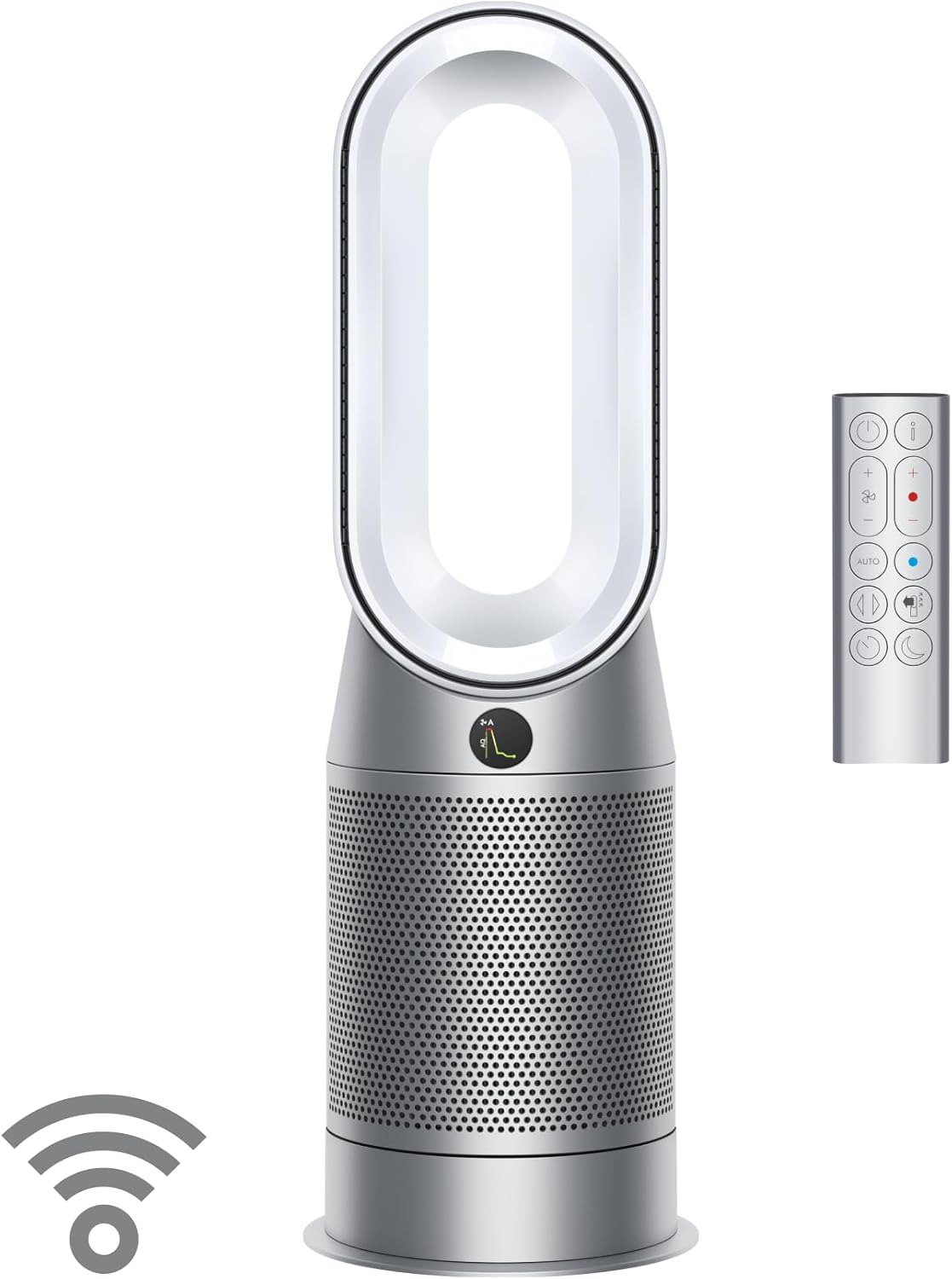
Short answer: the Dyson HP04 for glass blowing hobbyists with bench burner fumes is a reasonable starter unit for a small, well-ventilated lampworking nook running a Hot Head, Bobcat, or Minor burner on soft glass — but it is not a complete fume-control solution on its own. The HP04 pairs a sealed H13-grade HEPA filter with a thin activated-carbon sleeve and a 350° oscillating fan, which captures fine particulate and some VOCs. It does not, however, neutralize boron, heavy-metal oxides, or combustion byproducts the way a dedicated bench-burner exhaust hood does. Treat it as a supplemental scrubber that runs alongside cross-ventilation and a downdraft or overhead capture system, not a replacement for one.
Below we break down exactly where the HP04 helps a hobby lampworker, where it falls short, and which higher-CADR HEPA+carbon air cleaners give you more headroom when you upgrade from a Hot Head to a surface-mix torch like a Carlisle Mini CC or a GTT Lynx.
When shopping for dyson hp04 for glass blowing hobbyists with bench burner fumes, it pays to compare specs, capacity, and real-world runtime before committing.
What bench-burner fumes actually contain
Before picking a purifier, you need to know what you're filtering. A propane/oxygen bench burner working borosilicate (Simax, Northstar, Trautman) emits:
- Boron trioxide vapor — released above ~1,800 °F, condenses into ultrafine particulate as it cools.
- Metal oxide fumes — colored boro and soft-glass rods contain copper, cobalt, manganese, selenium, cadmium (in some older reds/oranges), and silver. These vaporize and recondense as breathable particles < 1 µm.
- Combustion byproducts — CO, CO₂, NOx, trace formaldehyde from burner tuning and any organic contamination on the glass.
- Devit and frit dust — silica-bearing particulate from grinding, cold-working, and devitrification flaking.
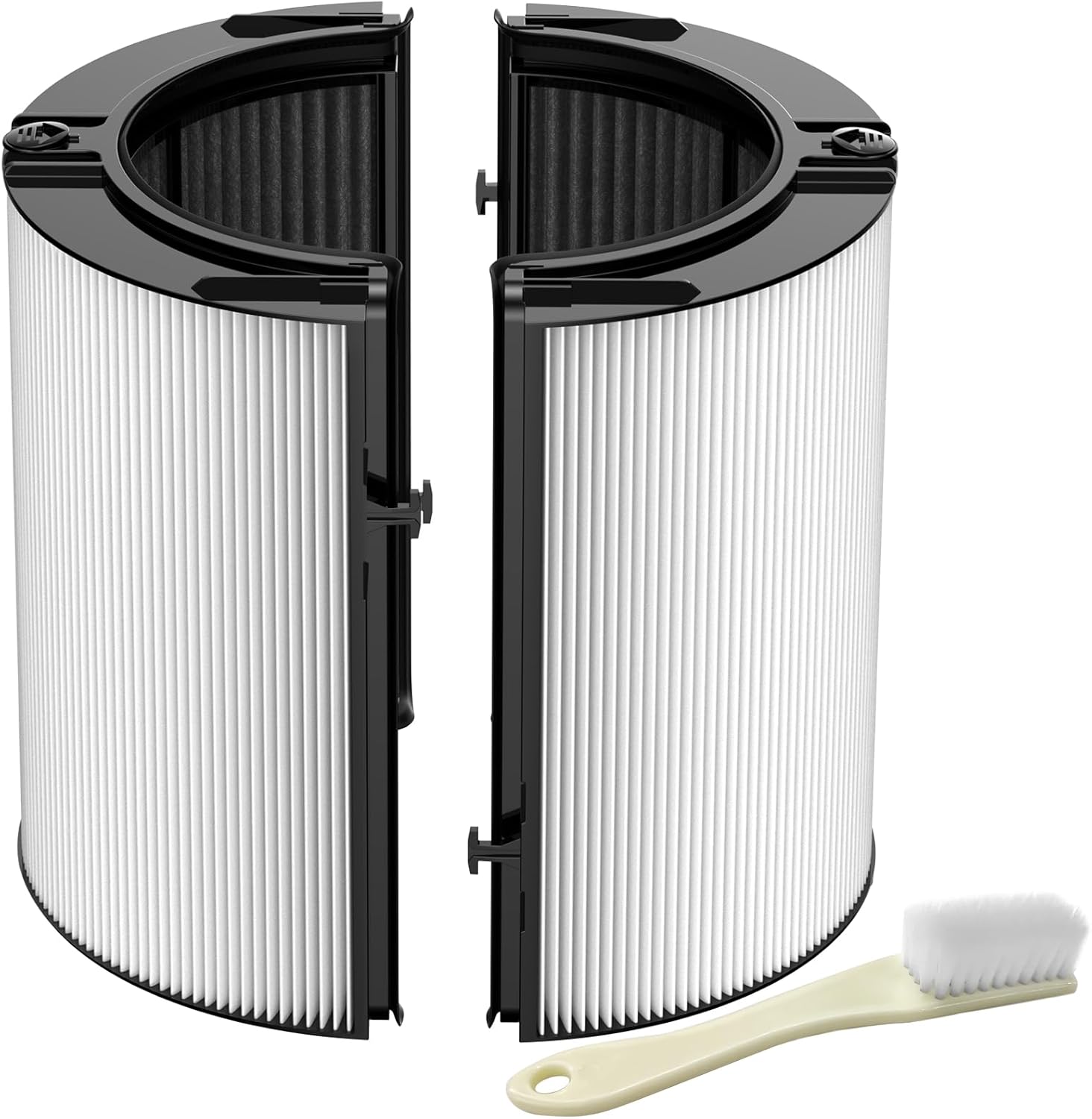
HEPA captures the particulate fraction (boron condensate, metal oxides, silica). Activated carbon adsorbs the gaseous fraction (VOCs, some NOx, organic vapors). You need both, and you need enough of each. The Dyson HP04 for glass blowing hobbyists with bench burner fumes brings both filter media into one unit, which is why it keeps showing up in lampworking forums — but the carbon layer is thin (Dyson lists ~200 g of activated carbon, versus 1–2 kg in dedicated fume cabinets).
Where the Dyson HP04 genuinely helps
The HP04 (Pure Hot+Cool 2018 generation, still sold and supported in 2026 with the HP07/HP09 as successors) has three qualities that matter for a small home studio:
- Sealed system to HEPA H13. Unlike many tower purifiers, the HP04 seals the airpath so 99.95% of 0.1 µm particles are actually captured rather than bypassing the filter at the gasket. For boron condensate and metal oxide ultrafines, that seal matters.
- Oscillation and directed airflow. You can point the bullet of clean air directly at your face from across the bench, which is useful when your overhead exhaust is pulling fumes past your breathing zone.
- Real-time PM2.5 + VOC sensing. The onboard sensors will spike visibly the moment you strike your torch on a colored rod. That feedback loop tells you when your hood capture is failing.
Where it falls short: CADR is modest (~290 m³/h smoke), the carbon sleeve saturates in 6–9 months of daily 2-hour torching sessions, replacement filters run $80+, and it is not rated for continuous high-concentration fume loads. If you run a Carlisle CC or larger more than an hour a day, you will out-pace it.
Better-value alternatives if you want more CADR or carbon
For most hobby lampworkers, a higher-CADR HEPA unit with a thicker carbon layer will outperform the HP04 in raw fume capture, even if it lacks the Dyson's sensors and heater. Here are the five we'd actually buy in 2026.
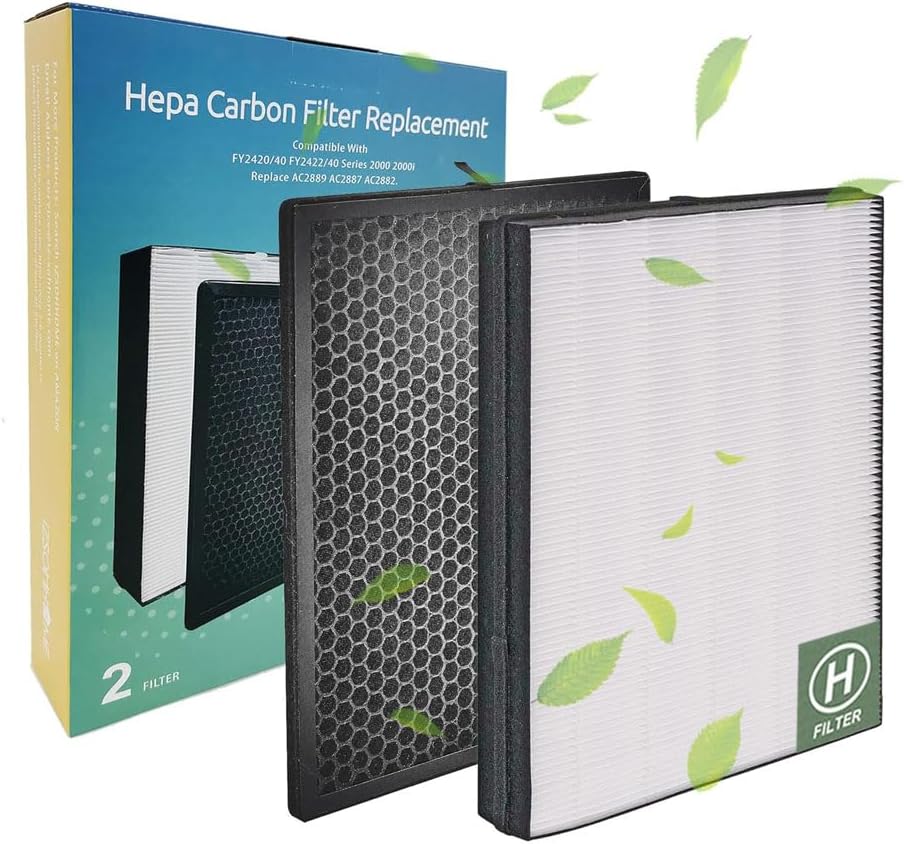
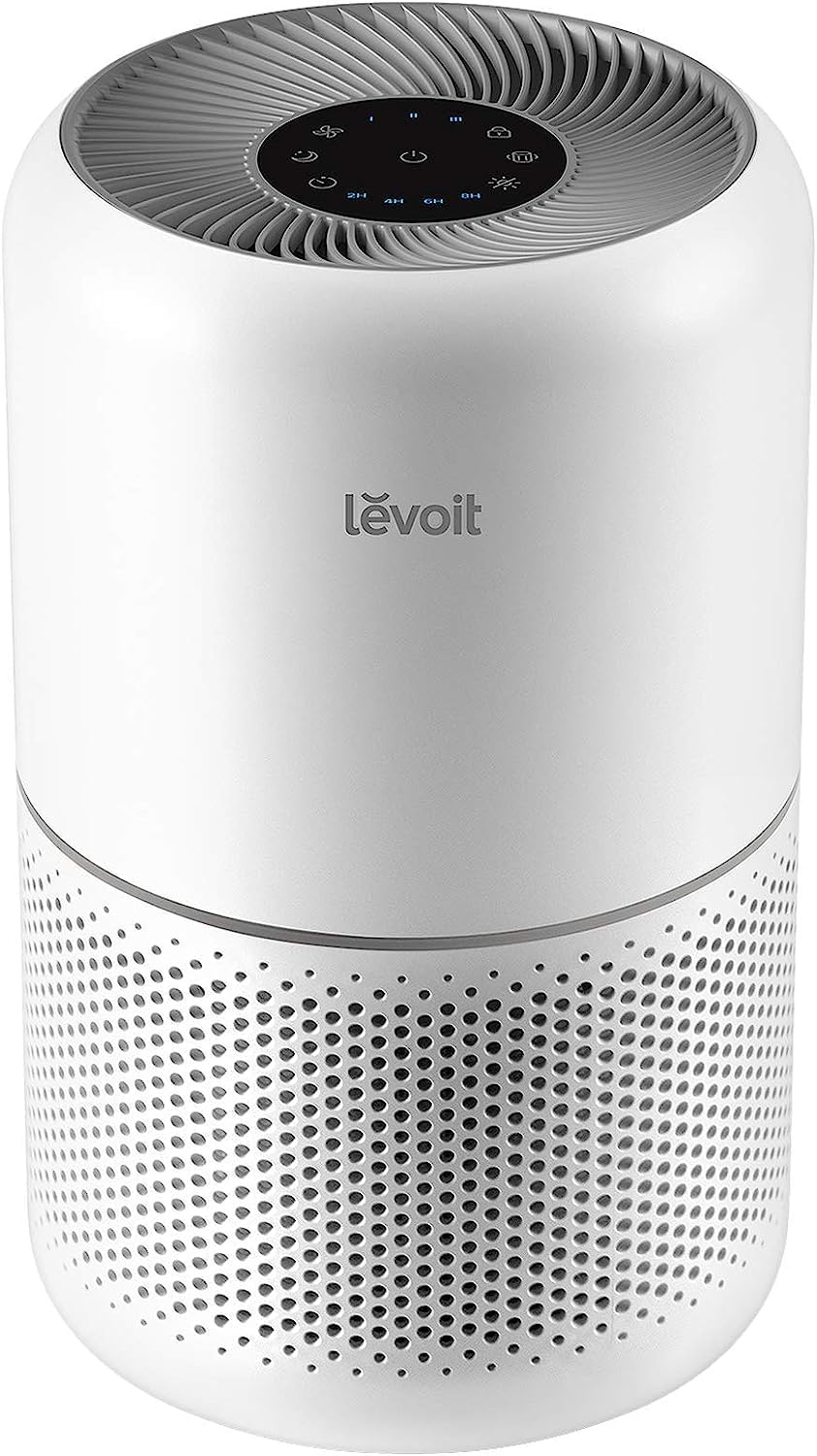
LEVOIT Air Purifier for Home Large Room up to 1875 Ft²
The best balance of price, true HEPA, and a meaningful activated-carbon layer for a one-burner home studio. The 1875 ft² rating means you can run it on medium speed in a typical 12x14 garage studio and still get 4–5 air changes per hour, which is the threshold where ultrafine boron condensate stops accumulating on surfaces. Replacement filters are cheap ($40 range), and the unit is quiet enough at speed 2 to run while you're torching. This is the unit we recommend for hobbyists running a Hot Head or Bobcat 1–2 hours a day on clear and lightly colored boro. Check current price on Amazon.
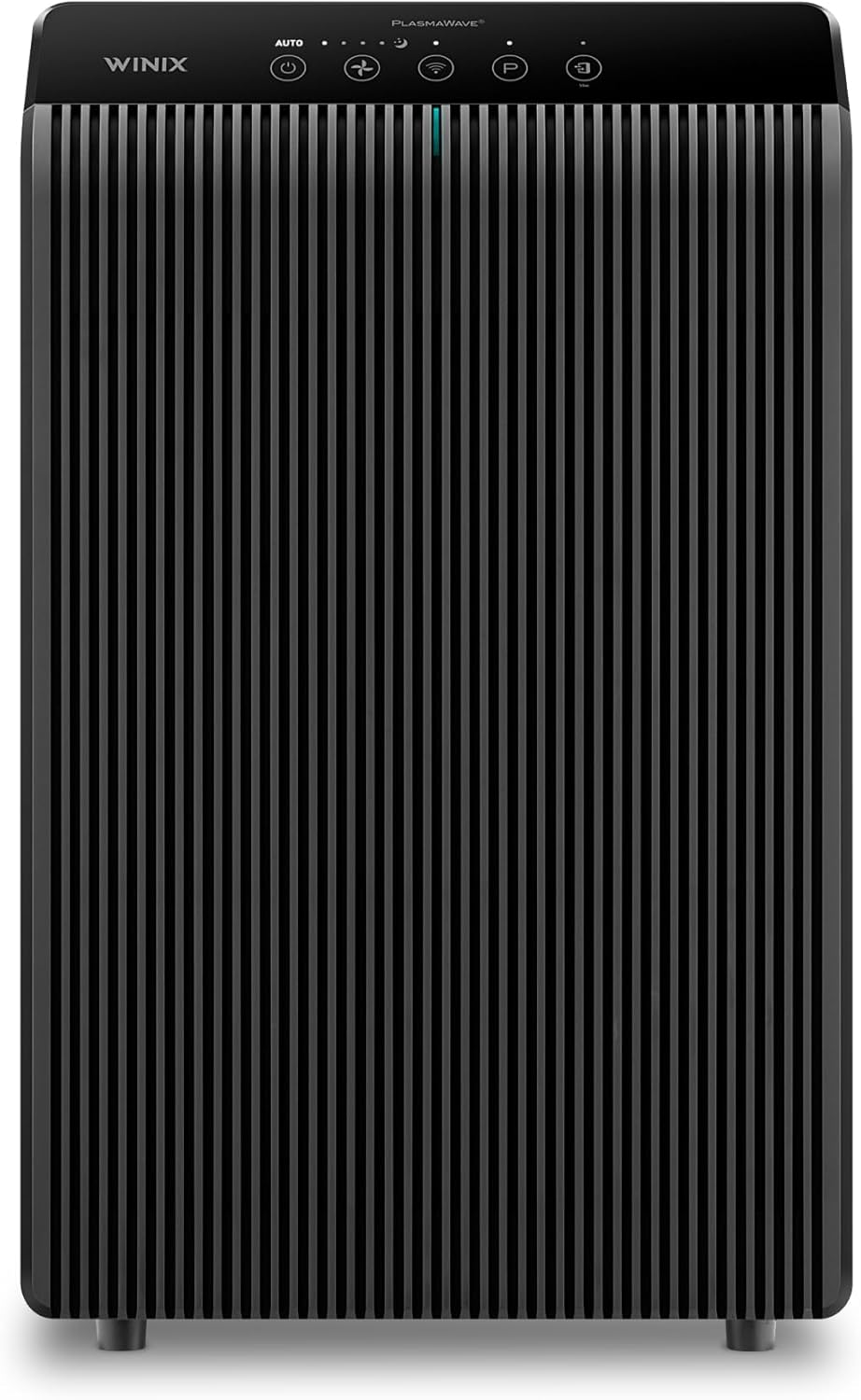
WINIX 5510 Air Purifier with App Support
The 2026 successor to the long-loved 5500-2, the 5510 adds Wi-Fi and app scheduling on top of the same proven True HEPA + AOC washable carbon panel + PlasmaWave architecture. The carbon panel is washable and replaceable separately from the HEPA, which is the real win for lampworkers: you can swap the carbon every 3 months without throwing out a $60 HEPA. PlasmaWave adds a small bipolar-ion stage that helps with the VOCs your carbon can't catch fast enough. Rated for ~360 ft² at 4 ACH, so size up to one per 200 ft² of studio if you're torching heavily. Check current price on Amazon.
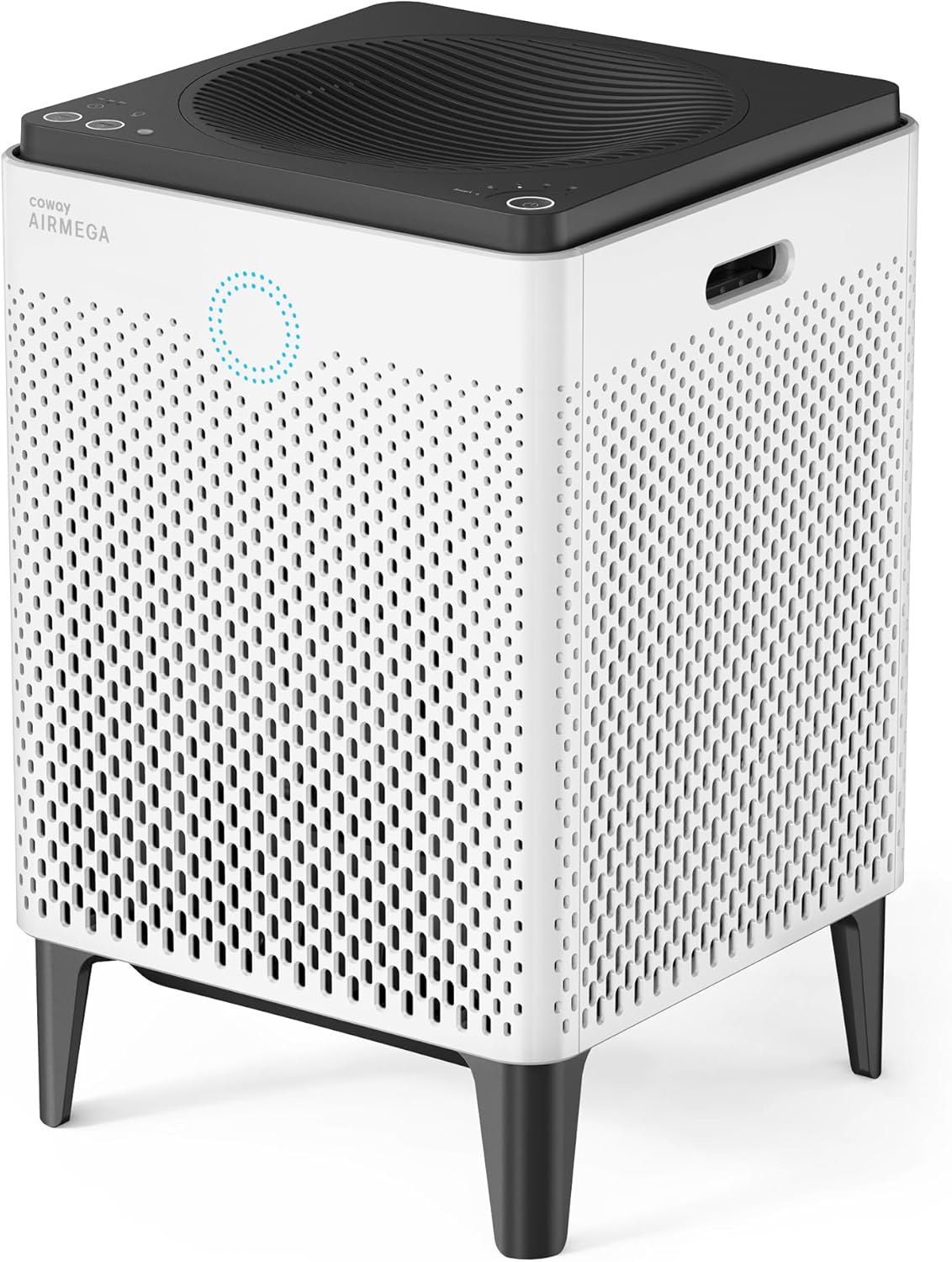
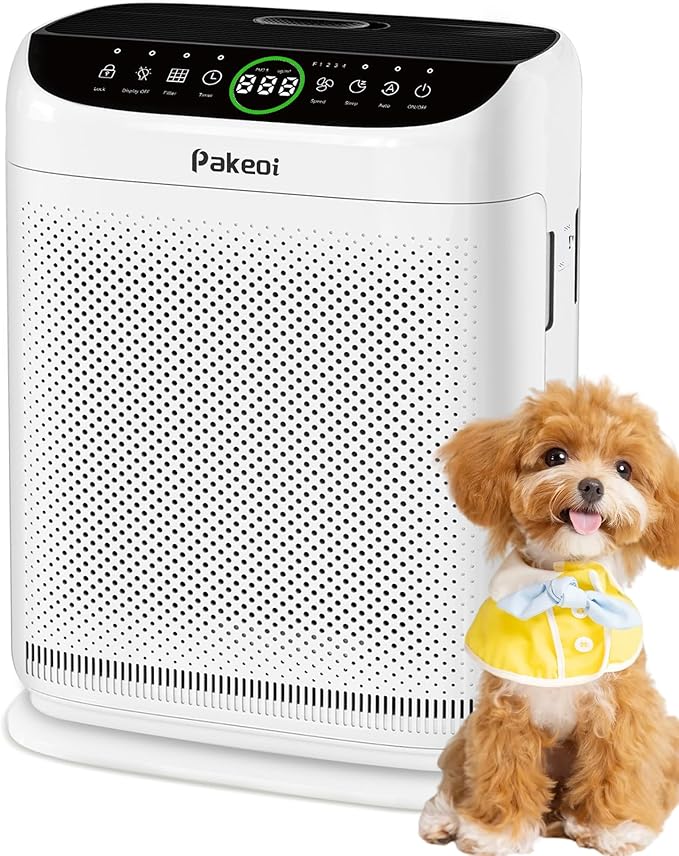
EVALIT Air Purifier for Home Large Room up to 2200 Ft²
A higher-CADR option for two-burner studios or hobbyists who do extended encasement work where fume load is constant. The 2200 ft² rating gives you headroom — running this on medium gives the same clean-air delivery as a smaller unit on maximum, which means quieter operation and longer filter life. Good choice if your bench is in a converted garage or shed where you can't easily add a roof exhaust. Check current price on Amazon.
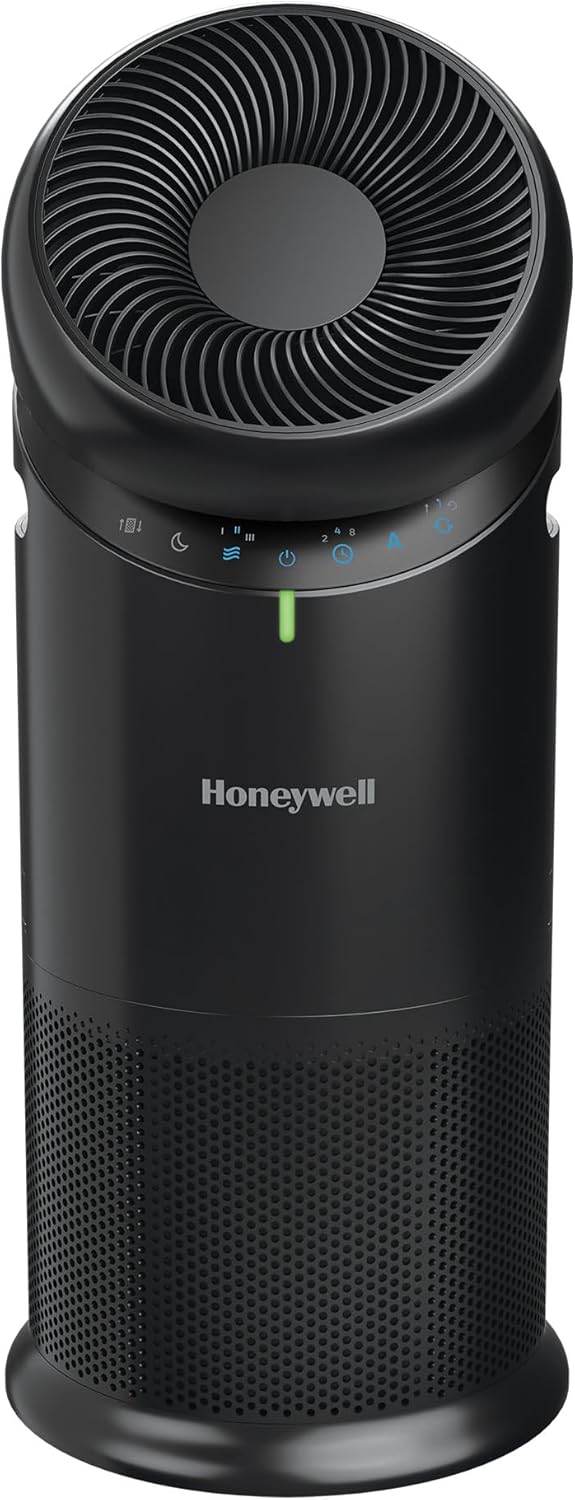
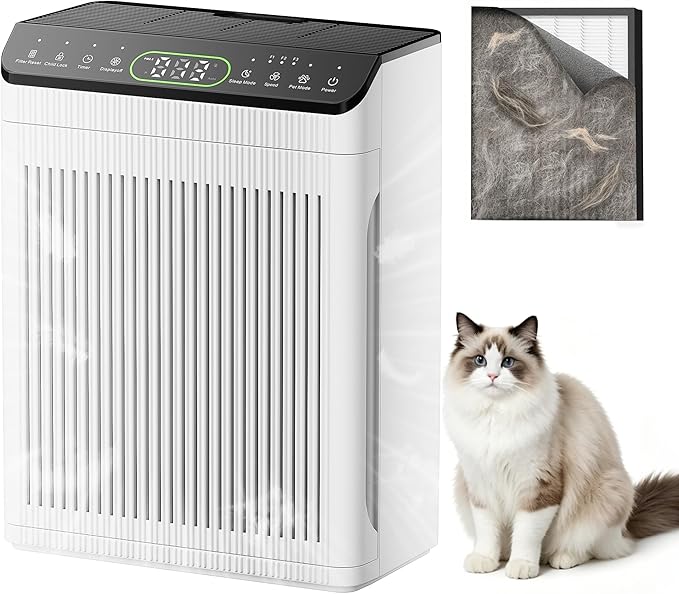
Air Purifier for Large Room up to 3000 Ft², Double Air Intake
The double-intake design is the practical advantage here. Lampworking fume plumes travel up and outward from the burner — a side-intake-only purifier (like the HP04) leaves a dead zone above and behind it. A dual-intake unit pulls air from both vertical and lateral planes, which is closer to how a real downdraft hood behaves. Pair it with a small box fan exhausting out a window and you have a credible amateur fume capture system. Check current price on Amazon.
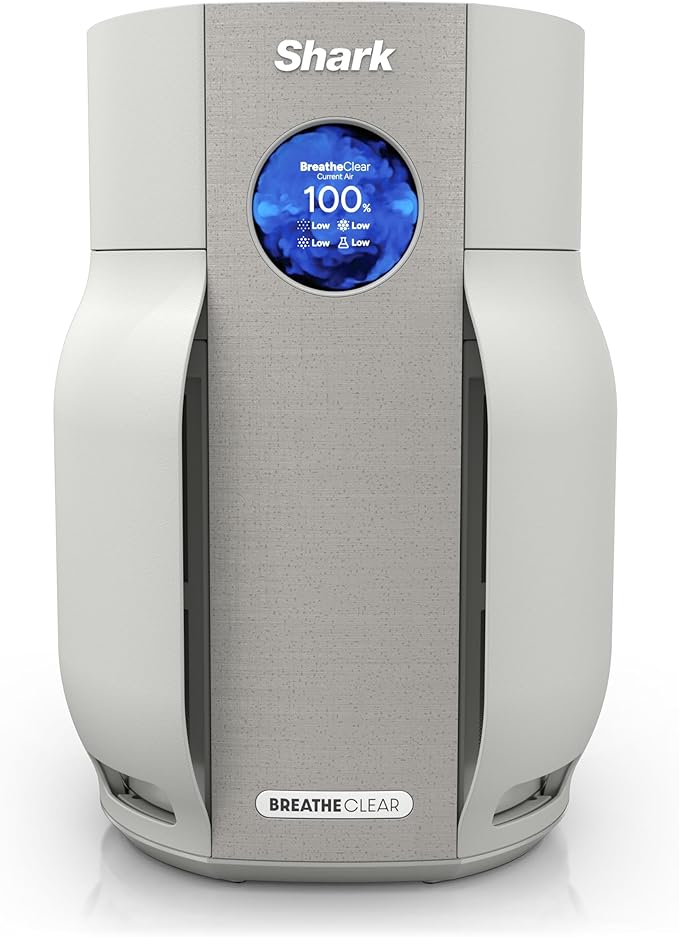
Shark BreatheClear NeverChange Intelligent Air Purifier
The pitch is a 5-year filter, which sounds incompatible with heavy-metal fume work — and it would be, except for one detail: the NeverChange uses a thick, dense HEPA media that you vacuum out rather than replace, with a separately replaceable carbon pre-filter. For a hobbyist who hates the recurring filter cost of a Dyson, this is the lowest total cost of ownership over a 5-year horizon. Just commit to vacuuming the HEPA monthly and swapping the carbon every quarter. Check current price on Amazon.
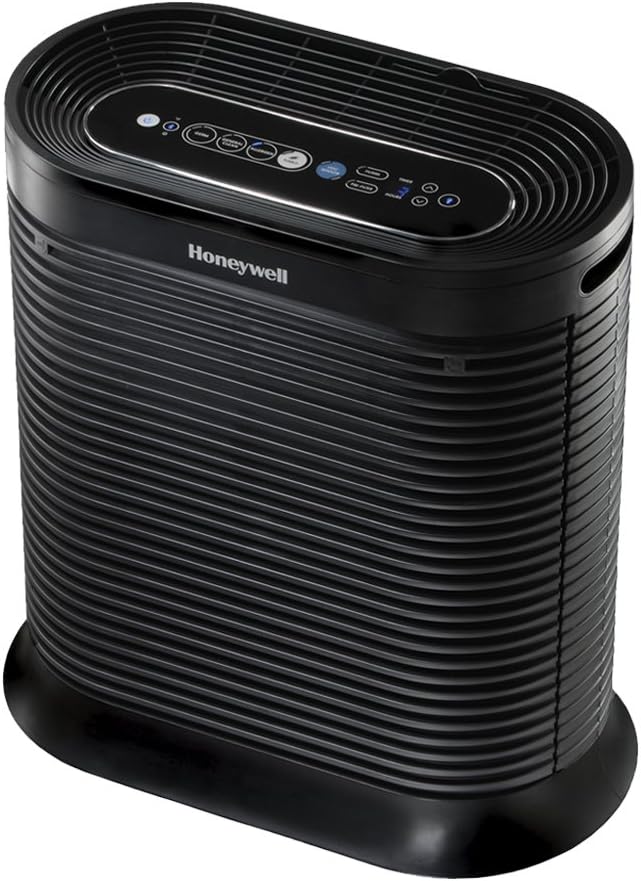
Comparison: HEPA+carbon purifiers for a home lampworking bench
| Model | Coverage | Carbon load | Best for | Annual filter cost |
|---|---|---|---|---|
| Dyson HP04 (reference) | ~400 ft² | Thin sleeve (~200 g) | Small nook, supplemental use | $80–160 |
| LEVOIT 1875 ft² | 1875 ft² | Medium | One-burner home studio | $40–80 |
| WINIX 5510 | ~360 ft² @ 4 ACH | Washable AOC panel | Hobbyists who want app + PlasmaWave | $50–90 |
| EVALIT 2200 ft² | 2200 ft² | Medium-thick | Two-burner or extended-session work | $60–100 |
| Double Intake 3000 ft² | 3000 ft² | Medium | Garage/shed studios without ducted hood | $60–110 |
| Shark BreatheClear NeverChange | ~1200 ft² | Replaceable carbon, 5-yr HEPA | Lowest 5-year total cost | $30–50 (carbon only) |
How to actually set up your bench for fume control
No standalone purifier — Dyson, LEVOIT, or otherwise — replaces source capture. The ranked approach for a home hobbyist:
- Source capture first. A 10" inline duct fan pulling through a flex hood positioned 6–10" behind your flame, exhausting outside, removes ~90% of fumes before they enter the room. This is non-negotiable for boro work.
- Cross-ventilation second. An open window with a small fan pulling room air toward the exhaust hood creates a sweep across your breathing zone.
- HEPA+carbon polishing third. This is where the Dyson HP04 or any of the alternatives above earn their keep — they catch the 5–10% of fumes that escape source capture and would otherwise settle on your shelves, lungs, and torch hands over hundreds of hours of work.
- Respirator for the worst stuff. When you're working cadmium reds, silver fumes, or doing extended fuming, wear a P100 with organic-vapor cartridges. No room air cleaner is a substitute for a face seal.
For deeper background on filter media, see our guides to HEPA air purifiers for hobby workshops and activated carbon versus HEPA for VOC removal. If you're choosing between portable and ducted solutions, our DIY fume extraction for home lampworking studios walkthrough covers the duct-fan-and-hood build that pairs with these purifiers.
Frequently Asked Questions
Is the Dyson HP04 enough on its own for a Hot Head bench burner running clear boro?
For 30–60 minutes a day on clear borosilicate with a Hot Head in a ventilated room, the HP04 is a reasonable single-unit answer. For colored boro, longer sessions, or any soft-glass work involving metallic colors, no — pair it with source-capture exhaust and a cross-breeze. The HP04's carbon layer saturates faster than its HEPA, so plan on carbon-side filter swaps every 6 months under that load.
Will a HEPA filter capture boron oxide fumes from borosilicate glass?
Yes, but only the particulate phase. Boron trioxide vaporizes off hot boro and immediately recondenses into ultrafine particles as it cools below ~1,200 °F. Those particles are well within HEPA's capture range (0.1–0.3 µm). The gaseous fraction is negligible at hobbyist torch volumes, so HEPA does most of the work and activated carbon polishes the residual VOCs from organic contamination on the rods.
How often should I replace filters when using an air purifier in a glass studio?
Plan on 2–3x the manufacturer's stated replacement interval. A purifier rated for 12-month filter life under normal home use will need a carbon swap every 4–6 months under daily torch use, and a HEPA swap every 8–12 months. The Shark BreatheClear NeverChange is an exception — its HEPA is designed to be vacuumed rather than replaced, and only the carbon pre-filter cycles.
Do air purifiers remove carbon monoxide from propane torches?
No. Activated carbon does not adsorb CO at room-temperature, ambient-pressure conditions. You need a CO detector at bench height, not a purifier. Mount one within 6 feet of your burner and replace its sensor element on the manufacturer's schedule. Any enclosed studio running a propane/oxygen torch should have working CO monitoring regardless of filtration.
What CADR should I look for in a purifier for a 200 sq ft home lampworking studio?
Target a smoke CADR of at least 250 CFM (about 425 m³/h) for 200 ft² with 8-foot ceilings, which delivers roughly 6 air changes per hour on high. The Dyson HP04 sits at the low end of acceptable; the LEVOIT 1875 and EVALIT 2200 give you substantial headroom to run at quieter speeds. Sizing up always beats running a smaller unit at max.
Can I use a Dyson HP04 in cold mode to scrub fumes without heating the room?
Yes. The HP04's heater is independent of its fan and HEPA path. Set it to fan-only or cool mode and the purification function works identically. The oscillation and Air Multiplier projection actually help in a studio because you can aim the clean-air stream directly at your face from across the bench while your exhaust hood pulls fumes the other direction.
Are there air purifiers specifically designed for soldering, lampworking, or kiln fumes?
Yes — dedicated benchtop fume extractors from Sentry Air, BOFA, and Hakko exist with deep carbon beds (1–4 kg) and HEPA polishing stages, priced from $400 to $2,500. For a serious production lampworker these are the correct answer. For hobbyists running 1–3 hours a week, a high-CADR home HEPA+carbon unit paired with source capture delivers most of the benefit at a quarter of the price. The decision point is roughly 5 hours of torch time per week — above that, invest in a real fume extractor.
Does the activated carbon in a purifier wear out faster in a glass studio than in a normal home?
Significantly faster. Carbon saturation depends on cumulative VOC exposure, and a torching session produces VOC loads orders of magnitude above background indoor air. Expect carbon life of 25–40% of the manufacturer's spec. Models with separately replaceable carbon stages (WINIX 5510, Shark NeverChange) are dramatically cheaper to maintain than monolithic-filter designs (Dyson HP04, where carbon and HEPA share one assembly).
Key Takeaways
- Choosing the right dyson hp04 for glass blowing hobbyists with bench burner fumes means matching capacity and output ports to your actual devices
- Always check actual watt-hours (Wh), not just watts — runtime depends on Wh, not peak output
- Also covers: dyson hp04 lampworking propane fume removal
- Also covers: air purifier glass blowing hobbyist bench burner
- Also covers: dyson hp04 flameworking home studio fumes
- Compare price-per-Wh across models to find the best value for your budget