If you're trying to figure out how to stack blueair 411 units in open loft bedrooms, the short answer is this: place one unit on the floor near the bed (the low-altitude dust and dander collection zone) and a second unit elevated on a shelf 5–6 feet up to catch the thermal plume rising toward the open ceiling. Two 411s deliver a combined CADR of roughly 210 cfm of smoke and 220 cfm of dust — enough for a 350–450 sq ft loft sleeping zone at 4.8 air changes per hour. Stagger them 8–12 feet apart horizontally so their intake cones don't cannibalize each other, and never physically stack them.
Why two Blueair 411s beat one bigger purifier in an open loft
Loft bedrooms — the kind without floor-to-ceiling walls separating the sleep area from the main living space — break the math that single-unit air purifiers rely on. Manufacturers rate CADR assuming a sealed room with smooth wall surfaces that bounce airflow back into circulation. An open loft has none of that. Half your clean air drifts down the stairwell or across the catwalk to the floor below before it ever cycles past your face.
Two 411s solve this by creating two overlapping clean-air zones instead of one expensive zone you hope reaches every corner. The 411 was designed around HEPASilent technology — a low-velocity, electrostatically charged intake that pulls particles in from a wide cone rather than a narrow jet. That wide cone is what makes stacking work; two units with overlapping cones produce a bubble of consistently low PM2.5 over the bed without either fan running above whisper mode.
Stacking placement: heights, angles, distances
The governing principle is vertical separation. Particulates don't distribute evenly in a loft; allergens like dust mite waste and pet dander settle low, while VOCs, cooking smoke, and combustion particles from candles or downstairs cooking rise toward the open ceiling. You need a collector at each altitude.
Floor unit (low collector)
Place 411 #1 on the floor, 18–24 inches from the bed on the windward side (the side facing any HVAC vent or stairwell opening). Floor placement captures settled dust as foot traffic stirs it up, plus exhaled CO2-laden warm air that cools and drops overnight. Keep at least 6 inches of clearance on all sides — the 411 pulls air in through every side panel and a blocked panel reduces effective CADR by 25–40%.
Elevated unit (plume catcher)
Place 411 #2 on a sturdy shelf, dresser, or wall-mounted ledge between 60 and 72 inches off the floor, 8–12 feet horizontally from the floor unit. This is the unit doing the heavy lifting against thermal plume — warm air rising from your body, electronics, and any downstairs heat sources passes through this unit before it escapes to the loft ceiling and out the open side.
What "without floor walls" actually changes
In a sealed bedroom, one purifier eventually homogenizes the whole room's air. In an open loft, you're fighting a continuous current of unfiltered air spilling in from the adjacent space. The stacked configuration creates a localized clean envelope around the bed rather than trying (and failing) to clean the entire open volume. Studies of personal-breathing-zone air quality consistently show that local source control beats whole-room dilution by 3–5x for sleep-relevant exposure.
When two 411s aren't enough: large-room alternatives
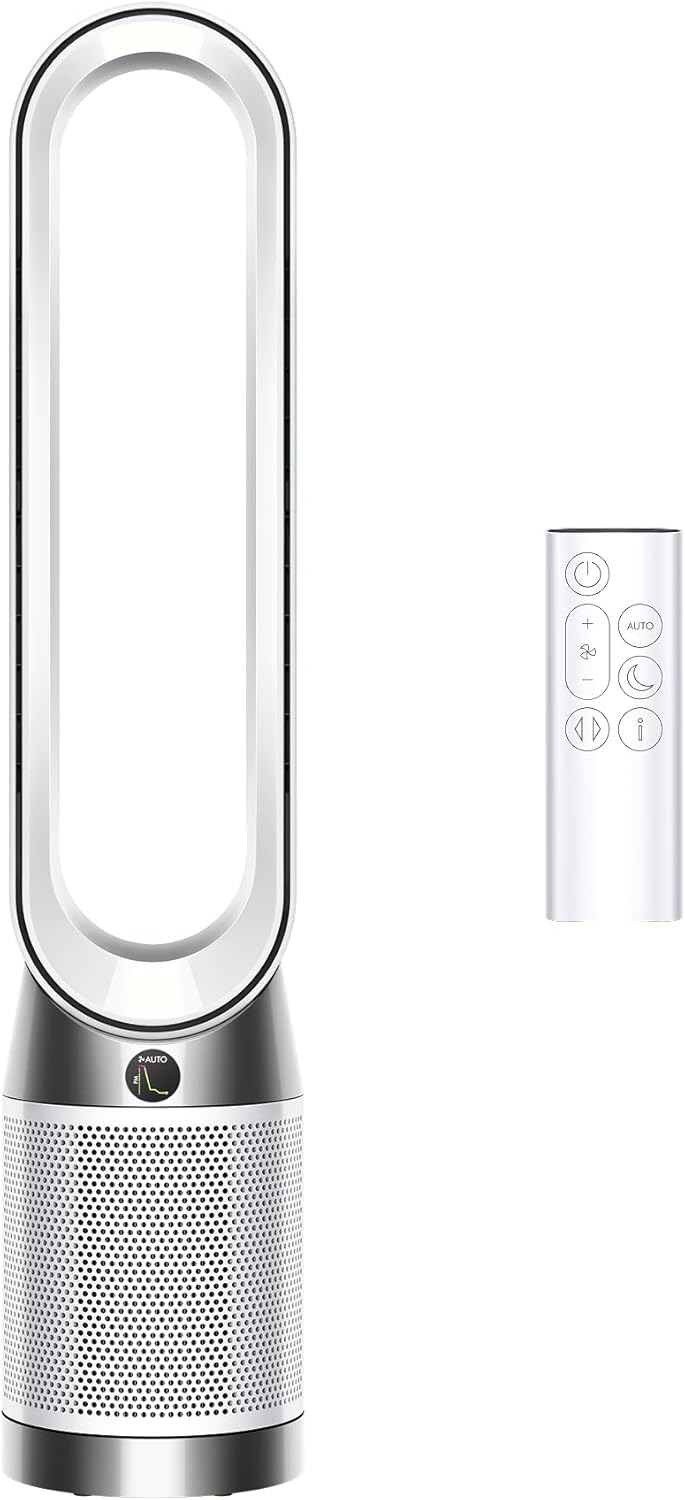
That's the foundation of how to stack blueair 411 units in open loft bedrooms — but two 411s only cover a sleep zone up to about 450 sq ft of effective volume. If your loft footprint is bigger, or if the open side connects directly to a kitchen, fireplace, or shared HVAC return, you'll want at least one larger-capacity unit. The five purifiers below all scale beyond what two 411s can deliver, and any of them can replace the elevated 411 while keeping the floor 411 as a personal-zone collector.
| Model | Rated coverage | Best loft use case | Noise (low) |
|---|---|---|---|
| LEVOIT Large Room | 1875 sq ft | Mid-size open loft, allergy focus | ~24 dB |
| WINIX 5510 (app) | ~360 sq ft @ 4.8 ACH | Smart-home owners, scheduled cycles | ~27 dB |
| EVALIT 2200 sq ft | 2200 sq ft | Large open lofts, wildfire smoke | ~28 dB |
| Double-Intake 3000 sq ft | 3000 sq ft | Lofts open to whole floor below | ~30 dB |
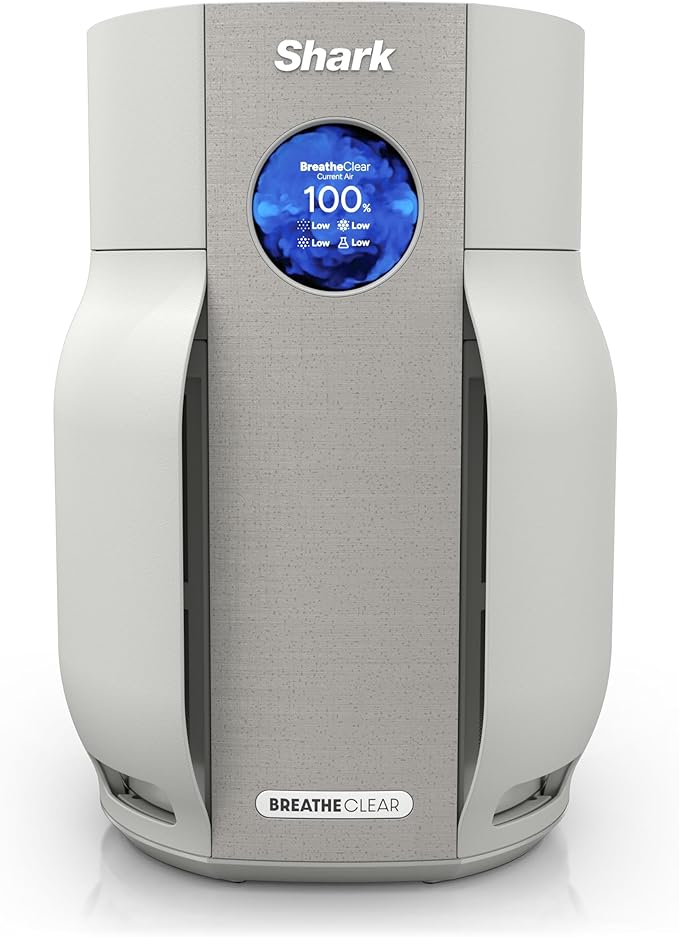
| Shark BreatheClear | ~1400 sq ft | Low-maintenance, no filter swaps | ~25 dB |
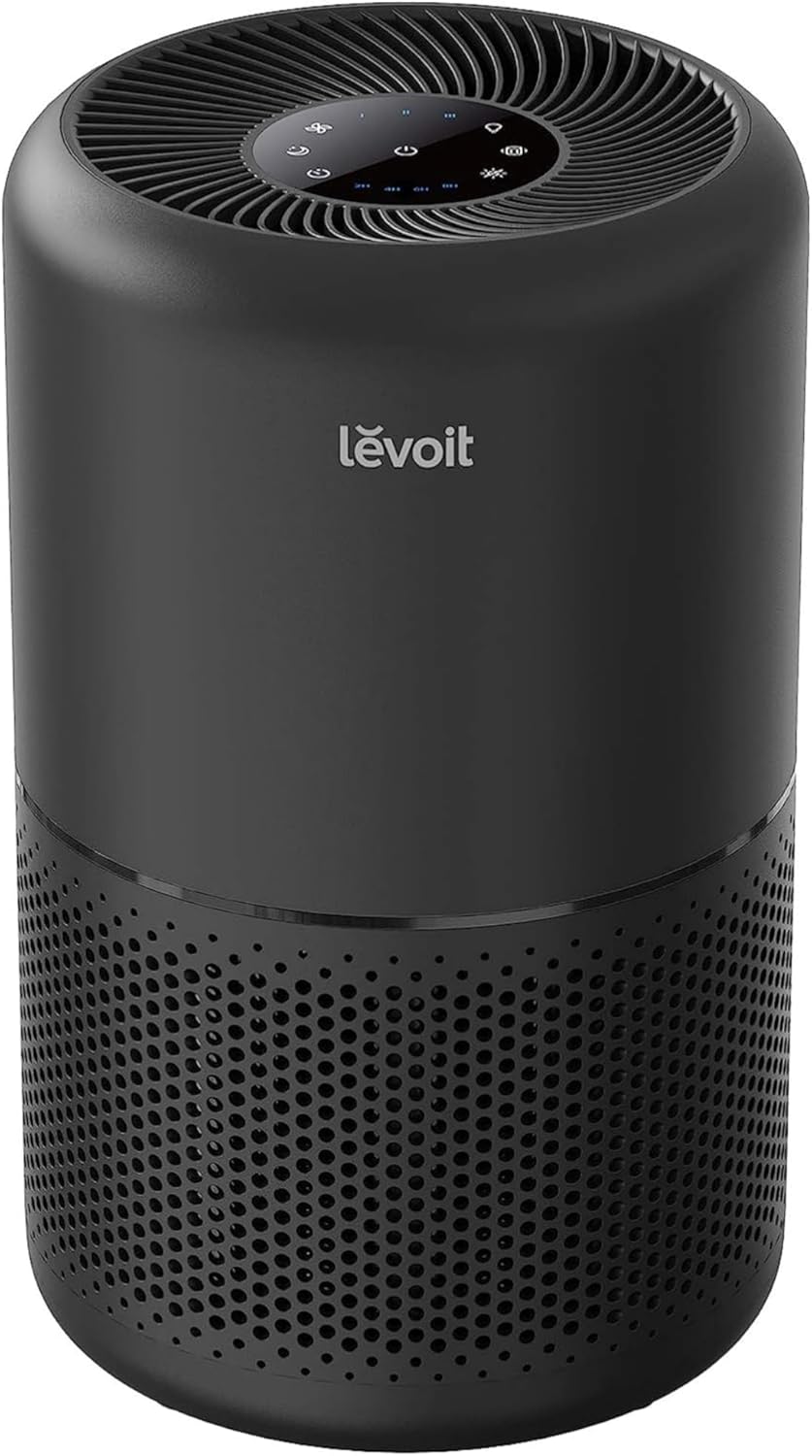
LEVOIT Air Purifier for Home Large Room up to 1875 Ft²
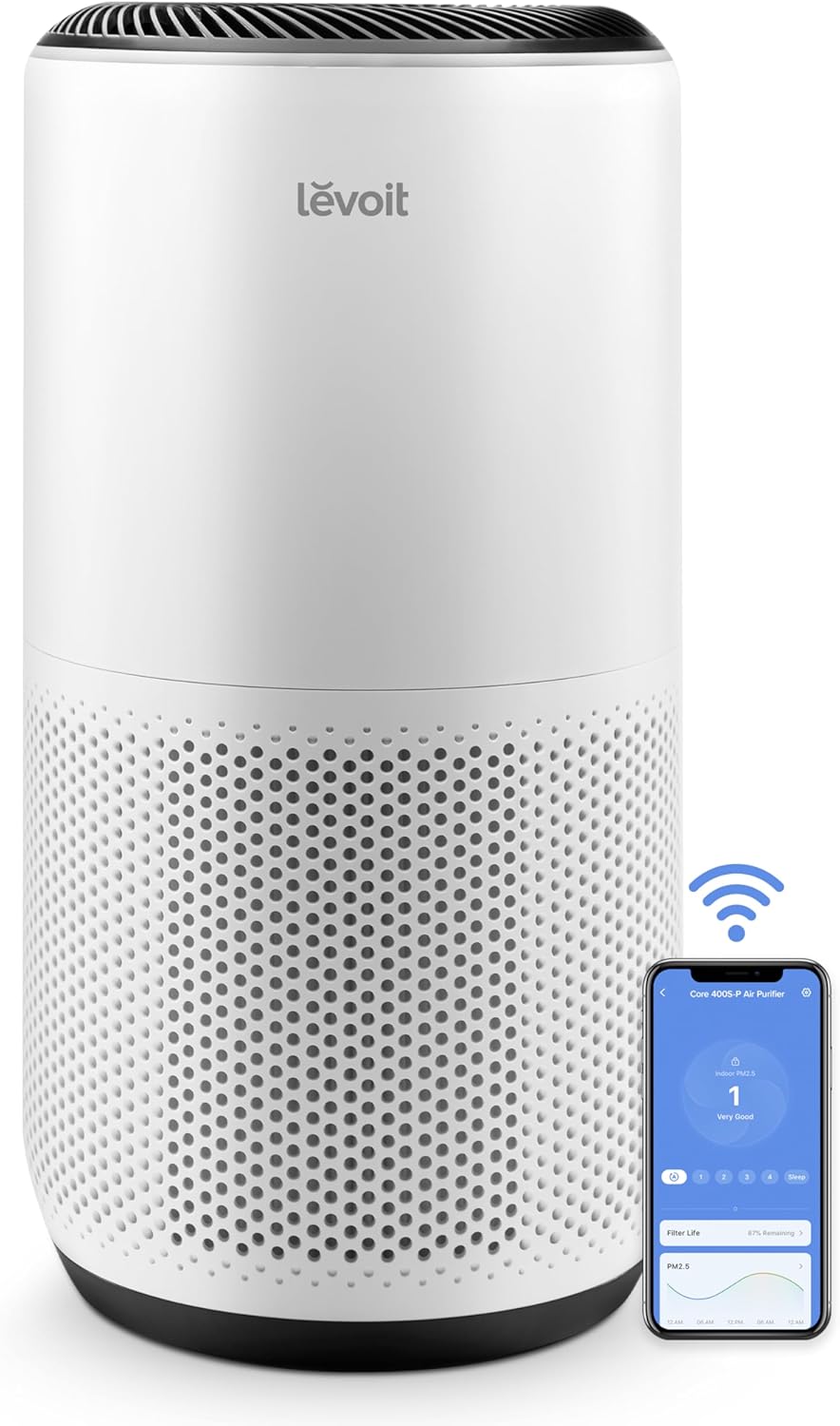
This is the closest spiritual successor to running two 411s side-by-side. The LEVOIT covers nearly the full footprint of an upper-loft sleep area at 4.8 ACH and runs whisper-quiet on its sleep setting. Use it as the elevated plume catcher while keeping a single 411 on the floor — same clean envelope, smaller power bill, one fewer filter to track. Check the LEVOIT 1875 sq ft model on Amazon.
WINIX 5510 with App Support
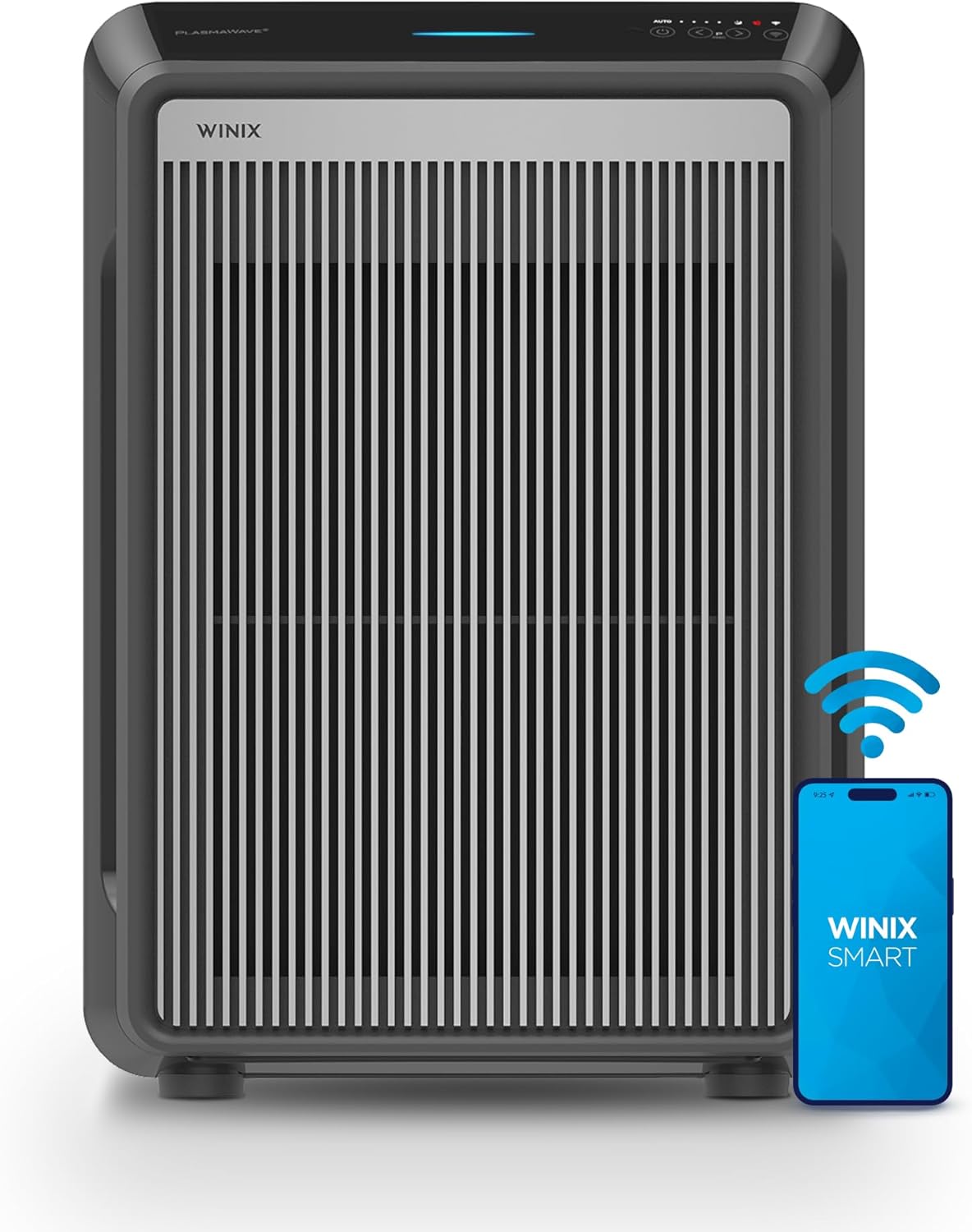
The 5510 is the smart-home upgrade for anyone who wants their loft purifier to ramp up automatically when air quality drops — like when someone's cooking downstairs in the open kitchen. Schedule a "deep clean" two hours before bed and let it idle on sleep mode through the night. The companion app lets you confirm overnight performance without leaving the bed. View the WINIX 5510 on Amazon.
EVALIT Air Purifier for Home Large Room up to 2200 Ft²
If your loft connects to a great room, or you live in a wildfire-prone zone where smoke loads can spike fast, the EVALIT's 2200 sq ft rating gives you the headroom to actually keep up. Pair it with one 411 as a bedside personal-zone unit and you've built a stratified two-stage system: bulk filtration from EVALIT, breathing-zone polish from the 411. See the EVALIT 2200 sq ft purifier on Amazon.
Air Purifier for Large Room up to 3000 Ft² with Double Air Intake
This is the heaviest hitter on the list — double air intakes mean it pulls particle-laden air from two sides simultaneously, which is exactly what an open loft needs when contamination drifts in from the floor below. Run it on auto mode as your whole-volume base and keep a 411 floor unit for breathing-zone polish. The dual intake also helps it stay quieter at equivalent CADR. Browse the 3000 sq ft double-intake purifier on Amazon.
Shark BreatheClear NeverChange Intelligent Air Purifier
The "NeverChange" branding refers to the multi-year filter lifespan — a meaningful win in a loft where the elevated purifier is annoying to reach for filter swaps. If you're putting a unit on a high shelf, beam ledge, or anywhere a stepladder is involved, going filter-light up top makes maintenance survivable for the long haul. Check the Shark BreatheClear on Amazon.
Wiring, power, and noise considerations
Two stacked 411s draw a combined ~20 watts on medium — trivial for any modern circuit, but you'll want both units on the same surge-protected outlet if possible so a single midnight power blip doesn't reset just one. Run a flat extension cord along the baseboard or up behind the shelf to keep the elevated unit looking clean. The 411 has no battery backup; if loft power is flaky, consider a small UPS for the floor unit at minimum.
On noise: two 411s on speed 1 each produce roughly 17 dBA — combined acoustic power is around 20 dBA at the bed, well below the EPA's 30 dBA sleep threshold. If you can hear them, they're either set too high or one fan bearing is failing. Both should run at speed 1 or 2 overnight; bump to speed 3 only during waking hours when you need rapid turnover after cooking smoke or pet dander spikes.
Maintenance schedule for stacked configurations
Filters in the floor 411 load up roughly 30% faster than the elevated unit because more settled particulate finds it. When you first set up the stacked pair, stagger replacements so they don't both come due simultaneously — replace the floor filter at 5 months and the elevated filter at 7 months, then settle into a permanent rotation. Vacuum the side intake grilles monthly; loft dust accumulates fast on every exposed surface, and a clogged intake silently kills CADR.
For broader strategy on combining multiple purifiers in tricky spaces, see our guide on multi-purifier bedroom layouts and our breakdown of CADR math for open-floor plans. If you're shopping a fresh setup rather than stacking gear you already own, our roundup of the best air purifiers for mezzanine bedrooms covers single-unit picks rated specifically for vertical-volume rooms.
Frequently Asked Questions
Can I physically stack two Blueair 411 units on top of each other to save floor space?
No — physically stacking the units blocks the side intakes of the lower one and the top exhaust of both, which kills CADR and can overheat the motors. The "stacking" in stacked configurations refers to layering coverage at different heights and locations in the room, not literal physical stacking. Always keep at least 6 inches of clearance on every side of each 411, and never put anything on top of either unit.
How far apart should two air purifiers be placed in an open loft bedroom?
8 to 12 feet of horizontal separation is the sweet spot for two 411s in a loft. Closer than 8 feet and their intake cones overlap so much you waste capacity re-cleaning already-clean air. Further than 12 feet and you create dead zones between them where contaminated air can drift through unfiltered. Adjust toward 12 feet if your loft has strong cross-drafts from open windows or a stairwell updraft.
Will two Blueair 411 units be enough for a loft bedroom open to the living room below?
Probably not for the whole open volume — but enough for your personal sleep zone, which is what actually matters. Two 411s create a localized clean envelope around the bed. To handle whole-floor air quality, add a larger-coverage unit downstairs near any contamination source (kitchen, fireplace, front door). The stacked 411 setup then becomes a final polishing layer that protects you specifically while you sleep.
Is it cheaper to run two Blueair 411s or one larger purifier for a loft?
For pure energy use, two 411s on low draw about 20 watts combined versus 30–45 watts for most large-room single units. Filter replacement costs are comparable per square foot of coverage. The real tradeoff is in CADR distribution: two smaller units deliver cleaner personal-zone air than one larger unit placed centrally, even though the larger unit "treats" more square footage on paper.
Where exactly should I put a Blueair 411 in a loft without walls?
Prioritize three placements in order: (1) within 4 feet of the bed on the side facing any opening to the rest of the floor, (2) at a height matching your sleeping position when stacked vertically across two units, and (3) at least 6 feet from any wall or large furniture piece that would create suction blockage on the unit's intake panels. Avoid corners — the 411 pulls air from all four sides and corners cut its effective intake area in half.
Do I need a true HEPA air purifier or is a regular one fine for an open loft bedroom?
True HEPA (or HEPASilent like the Blueair) is strongly recommended for open lofts because the lack of walls means continuous cross-contamination from cooking, foot traffic, pets, and outdoor air infiltration. Non-HEPA units that rely on ionization alone can release trace ozone, which is unsafe to concentrate in a sleeping zone. Stick to certified HEPA or HEPASilent for any bedroom use, especially when you're following a guide on how to stack blueair 411 units in open loft bedrooms.
How often should I replace filters when running two stacked Blueair 411 units?
Every 5–7 months for the floor unit and every 7–9 months for the elevated unit. The floor 411 catches more settled particulate so its filter loads faster. Stagger your purchases so both filters don't come due the same month, and set a phone reminder — the 411 has no filter indicator light, so you're on the honor system. A loaded filter doesn't fail visibly; it just quietly stops doing its job.
Key Takeaways
- Choosing the right how to stack blueair 411 units in open loft bedrooms means matching capacity and output ports to your actual devices
- Always check actual watt-hours (Wh), not just watts — runtime depends on Wh, not peak output
- Also covers: blueair 411 loft apartment setup
- Also covers: two blueair 411 open plan bedroom
- Also covers: stacking blueair purifiers loft
- Compare price-per-Wh across models to find the best value for your budget