The Medify MA-25 for podcasters recording in untreated walk-in closets is one of the smartest small-footprint picks for 2026 because it pairs a true H13 HEPA filter with a sleep mode quiet enough to stay below most condenser mic noise floors. Closets full of hanging clothes hide dust, fiber shed, and stagnant CO2-heavy air that ruin long-form takes. The MA-25's rated 500 sq ft CADR is oversized for a typical 30–60 sq ft closet, and that headroom is the whole point — you can run it on whisper-low between segments and still cycle the air four to six times per hour without ever pushing audible turbulence into your microphone capsule.
Why a closet podcaster needs a purifier at all
Untreated walk-in closets get used as makeshift booths for one reason: dense soft goods absorb reflections cheaply. The same hanging shirts, sweaters, and rugs that kill flutter echo also shed fiber dust continuously, especially when you brush past them setting up. Add a tight-sealed door, a body in the space, and a hot laptop, and a 50 sq ft closet can climb past 1,200 ppm CO2 within 20 minutes. Most podcasters chalk up the resulting fatigue, dry throat, and “tired voice” three takes in to caffeine or hydration — it is usually the air.
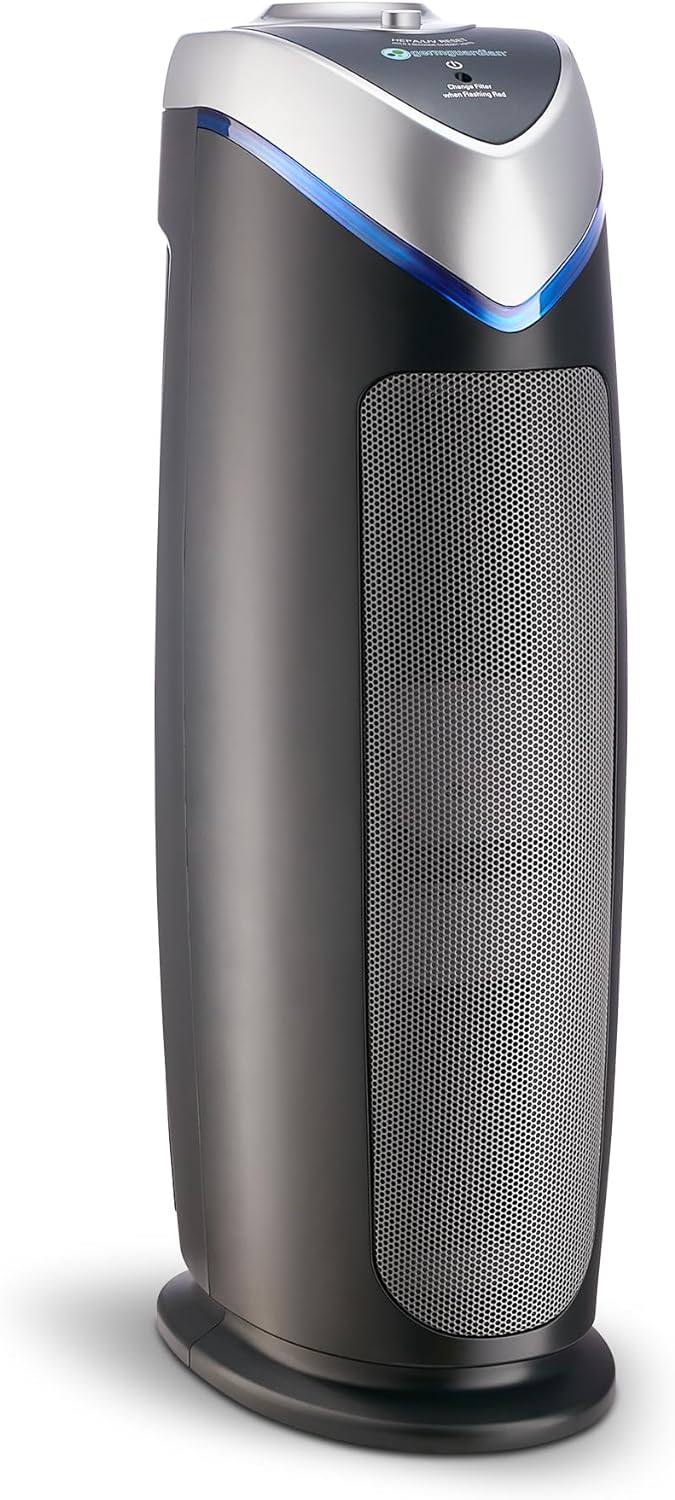
A correctly sized HEPA unit solves three problems at once: it removes the fiber and dust that triggers throat clearing and coughing on-mic, it keeps allergens from accumulating in a low-ventilation space, and (when paired with the door cracked an inch) it forces enough exchange to keep CO2 manageable. The trick is finding a unit quiet enough that you do not have to power it off during takes, because every off-cycle means dust resettles right when you start recording.
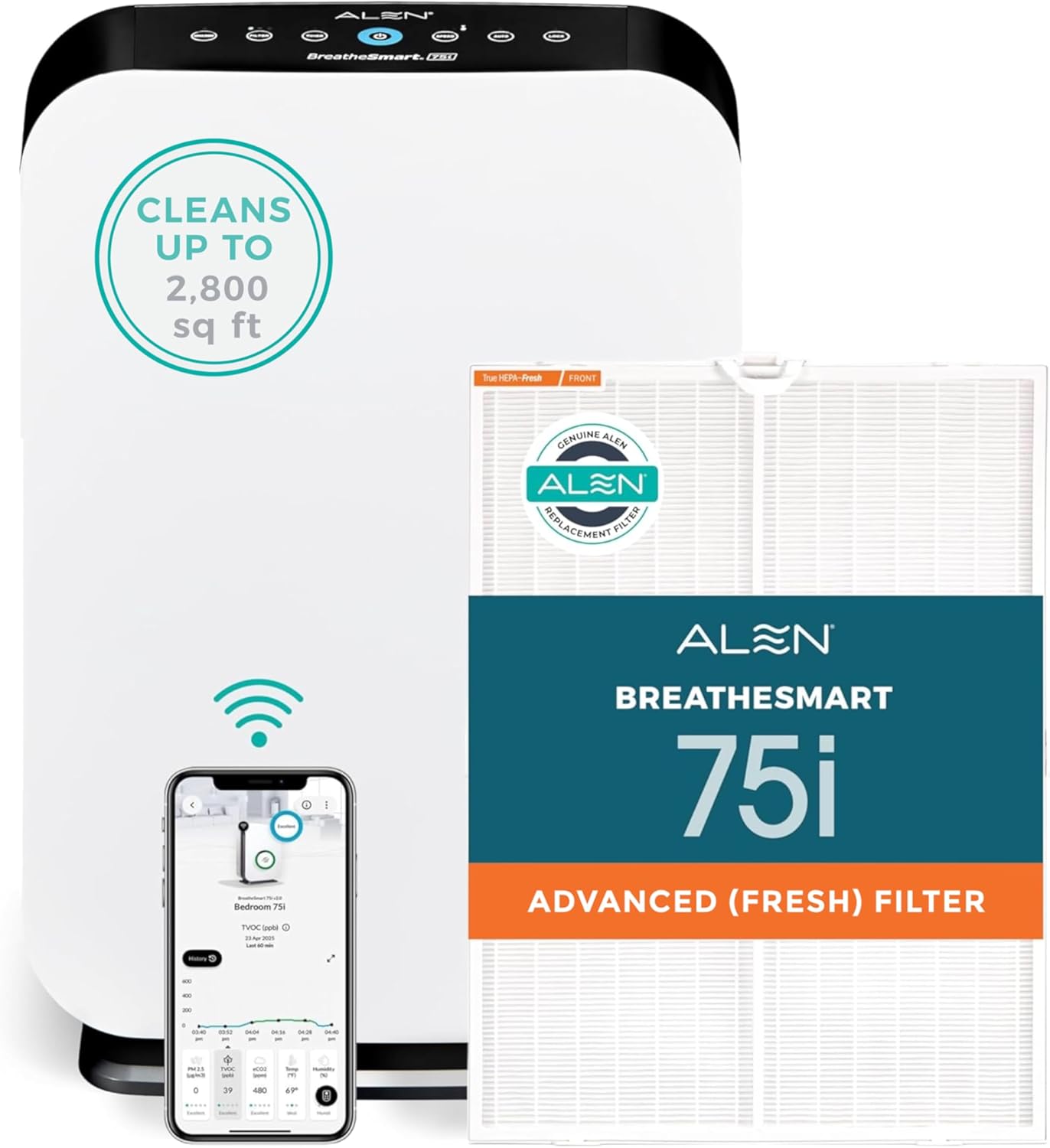
The Medify MA-25 in detail
The MA-25 ships with a three-stage filter: a pre-filter for hair and large fiber, an H13 HEPA layer rated to 99.97% at 0.3 microns, and a thin activated carbon sheet for outgassing from dry-cleaning chemicals (relevant if your closet doubles as wardrobe storage). Medify rates it for rooms up to 500 sq ft at one air change per hour, which translates to roughly five to seven air changes per hour in a typical walk-in. CADR is published at 232 for smoke, 240 for dust, and 232 for pollen — strong numbers for the footprint.
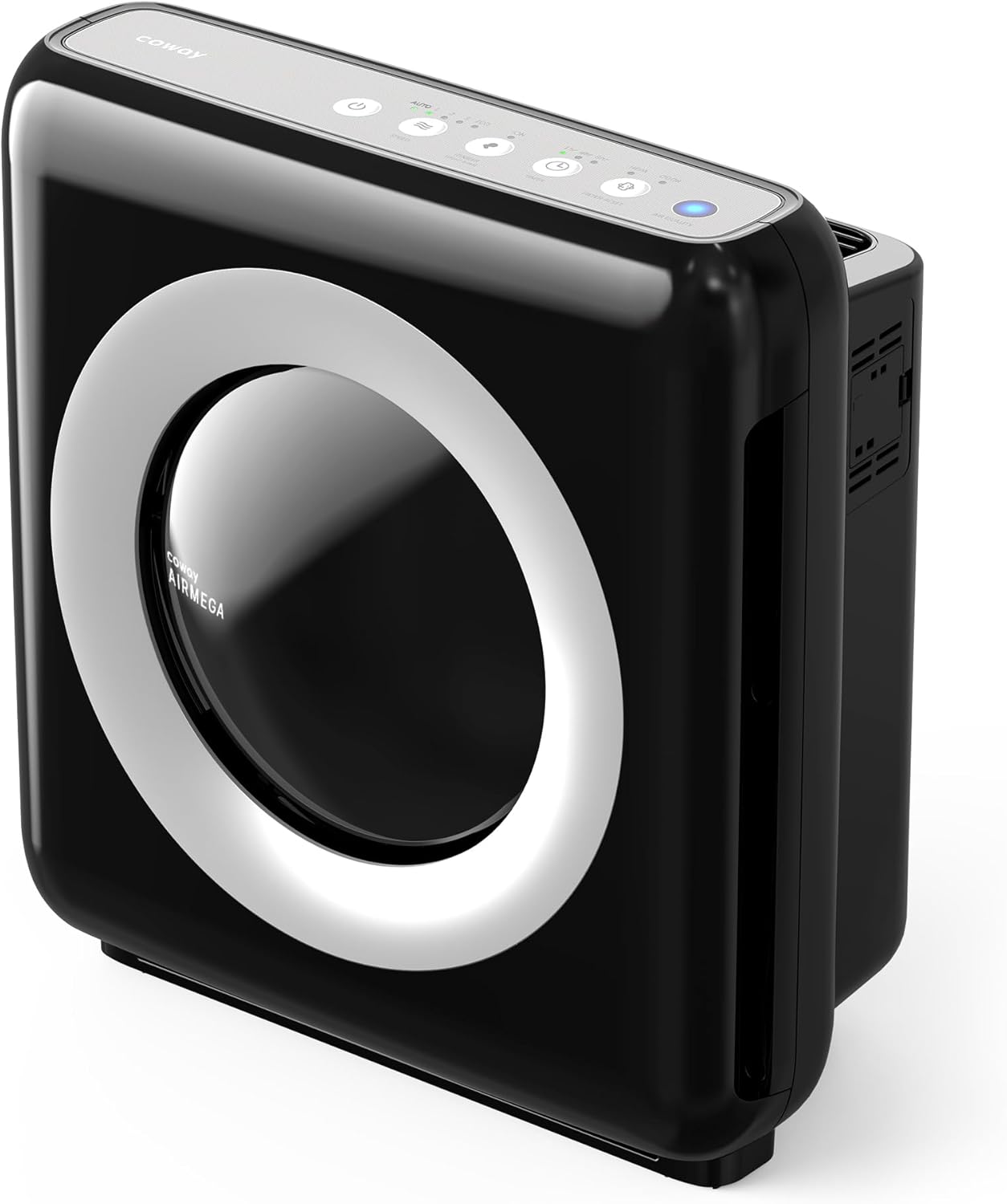
The decibel story matters most for voice work. On the lowest of three speeds, Medify publishes 30 dB at one meter. In a soft-goods-saturated closet, the practical noise floor at the mic position drops several dB further because the same clothes absorbing your room reflections also absorb the purifier's exhaust. With a large-diaphragm condenser at 6–8 inches and a low-cut filter at 80 Hz, the MA-25 on speed 1 generally stays below the self-noise floor of a typical USB or XLR podcast mic.
The 360-degree intake is the other reason it suits a closet specifically: you do not have to orient it toward an empty wall to get airflow. You can tuck it into a corner near the door — usually the only floor space available — and it will still pull from all sides.
When to size up: closets that are not really closets
Some “walk-in closets” are 8x10 or larger, and some podcasters leave the door open to a bedroom for thermal reasons. In those cases the MA-25's effective air changes per hour drop into the marginal range, and a larger unit run on its lowest setting is often quieter at the mic than a small unit run on medium. The three picks below cover the three main “my closet is bigger than the MA-25 was built for” scenarios that podcasters in 2026 keep asking about.
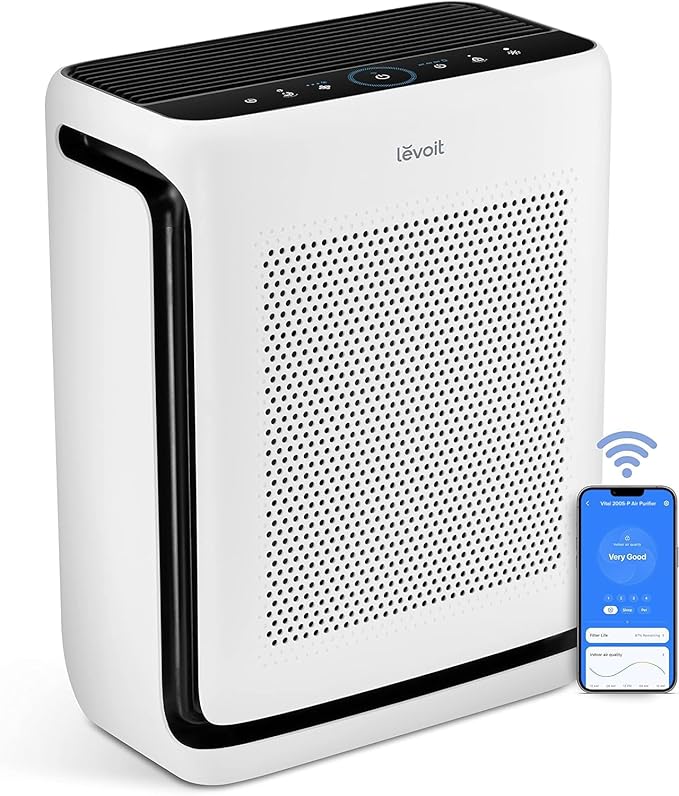
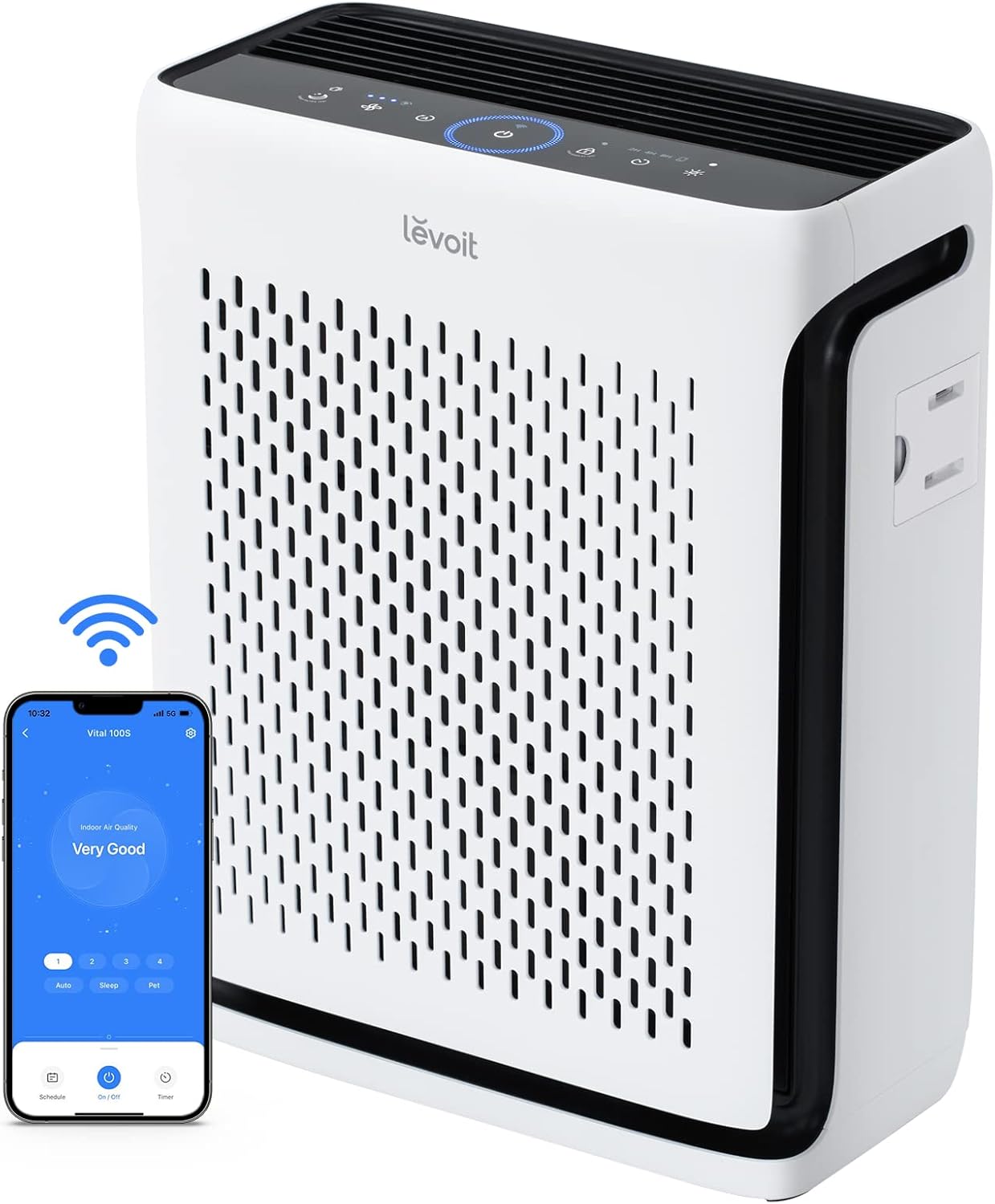
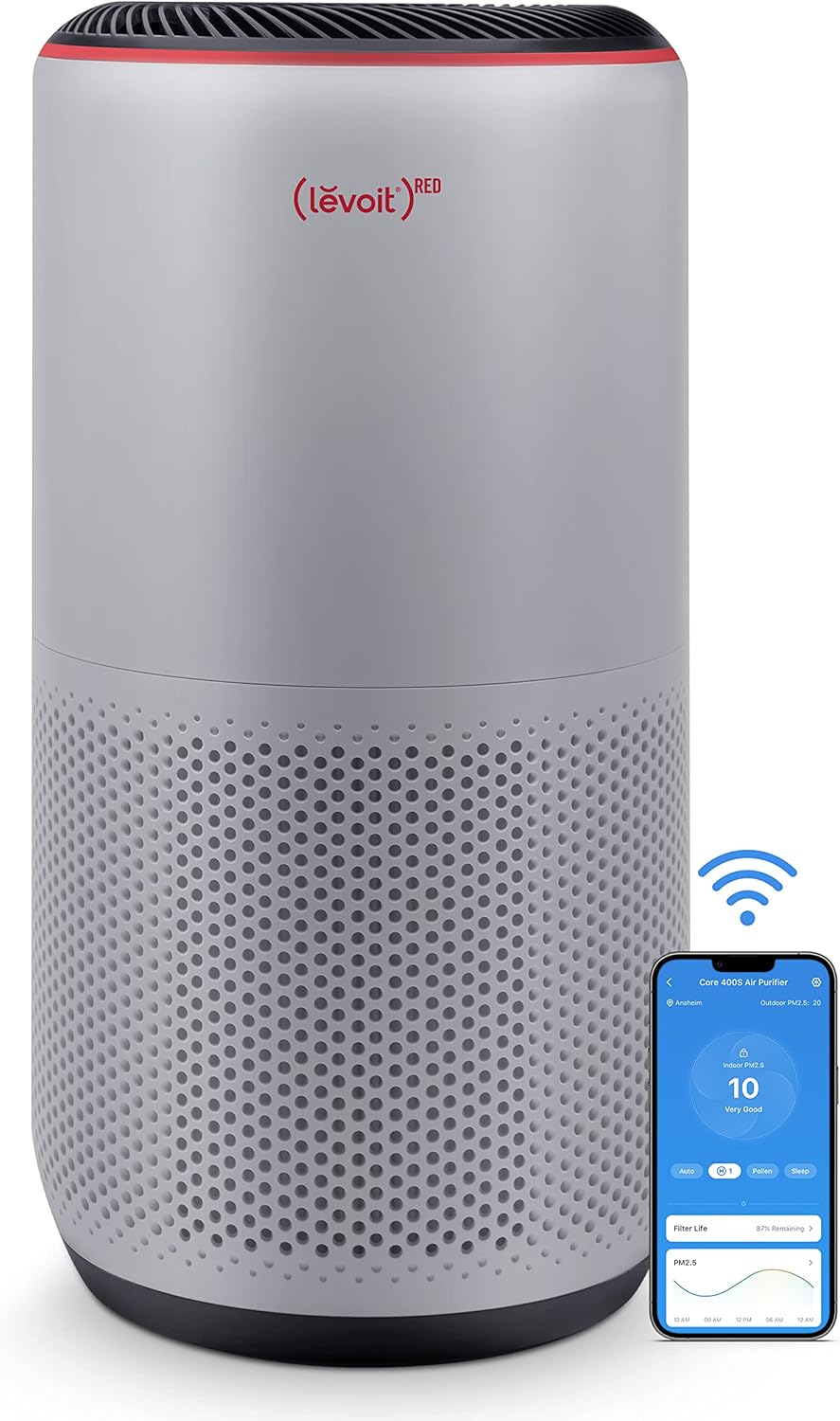
LEVOIT Air Purifier for Home Large Room (up to 1875 Ft²)
This is the model to consider if your closet opens to a bedroom you cannot seal off. Rated for 1875 sq ft, it delivers enough CFM at its lowest, quietest speed to cover a combined 200–300 sq ft space at four to six air changes per hour. The three-stage filter is comparable to the MA-25, and the sleep mode dims indicators (important — even a dim blue LED reflects off a popper shield in low-light closet recording). For a podcaster whose closet booth is really a closet-plus-bedroom hybrid, this is the more honest pick. View on Amazon.
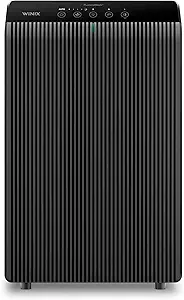
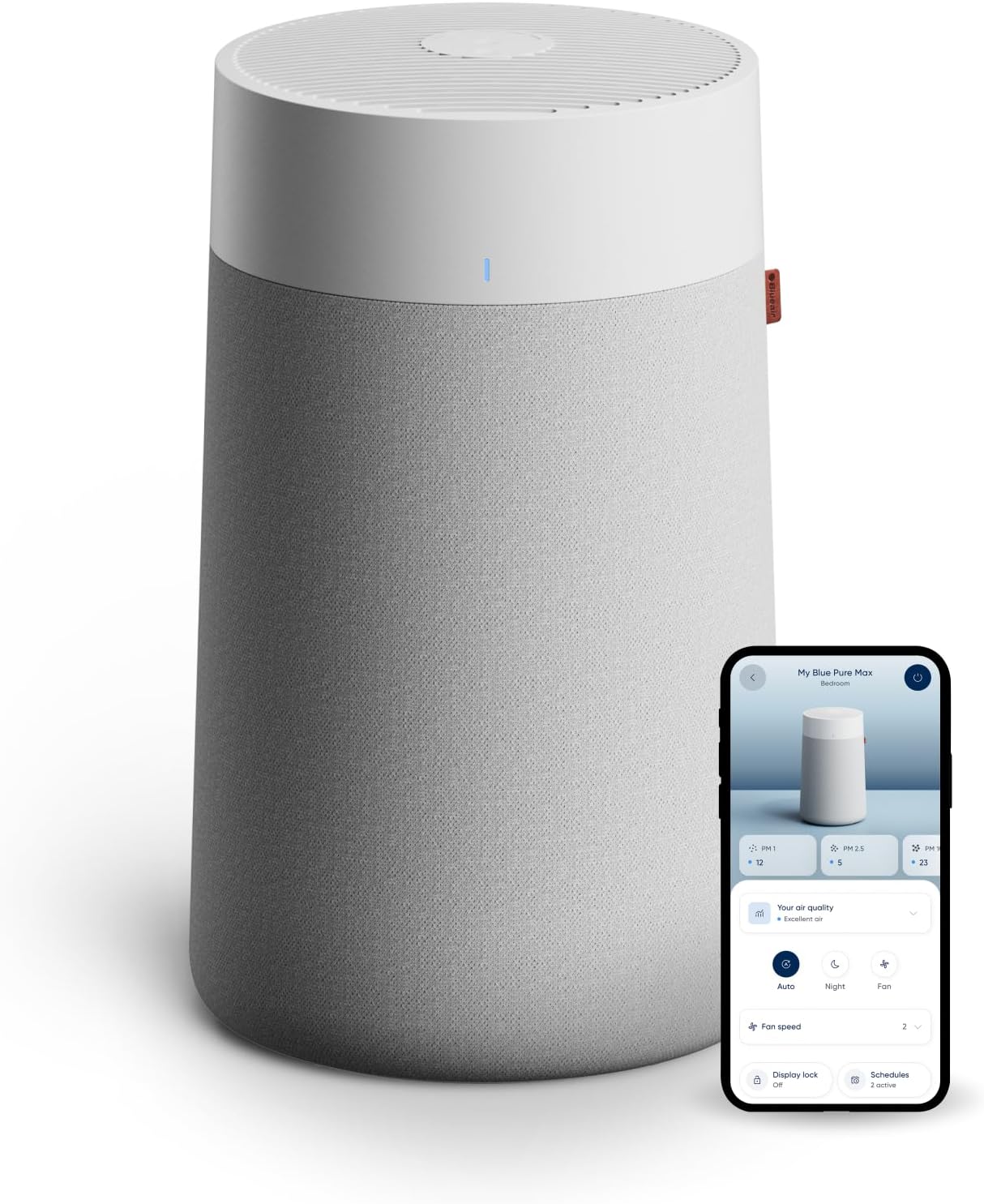
WINIX 5510 Air Purifier with App Support
The 5510 is the 5500-2's 2026 successor, with the same well-respected four-stage filter (pre-filter, true HEPA, AOC carbon, PlasmaWave) plus app control. App control matters specifically to podcasters because you can drop it to sleep mode from your phone without leaving the booth and re-disturbing the dust. The PlasmaWave ionizer is defeatable — leave it off for recording, because some condenser mics pick up faint corona discharge artifacts. Rated for roughly 360 sq ft, so it is a good fit for walk-in closets in the 60–100 sq ft range that need more headroom than the MA-25 but where the LEVOIT 1875 is overkill. View on Amazon.
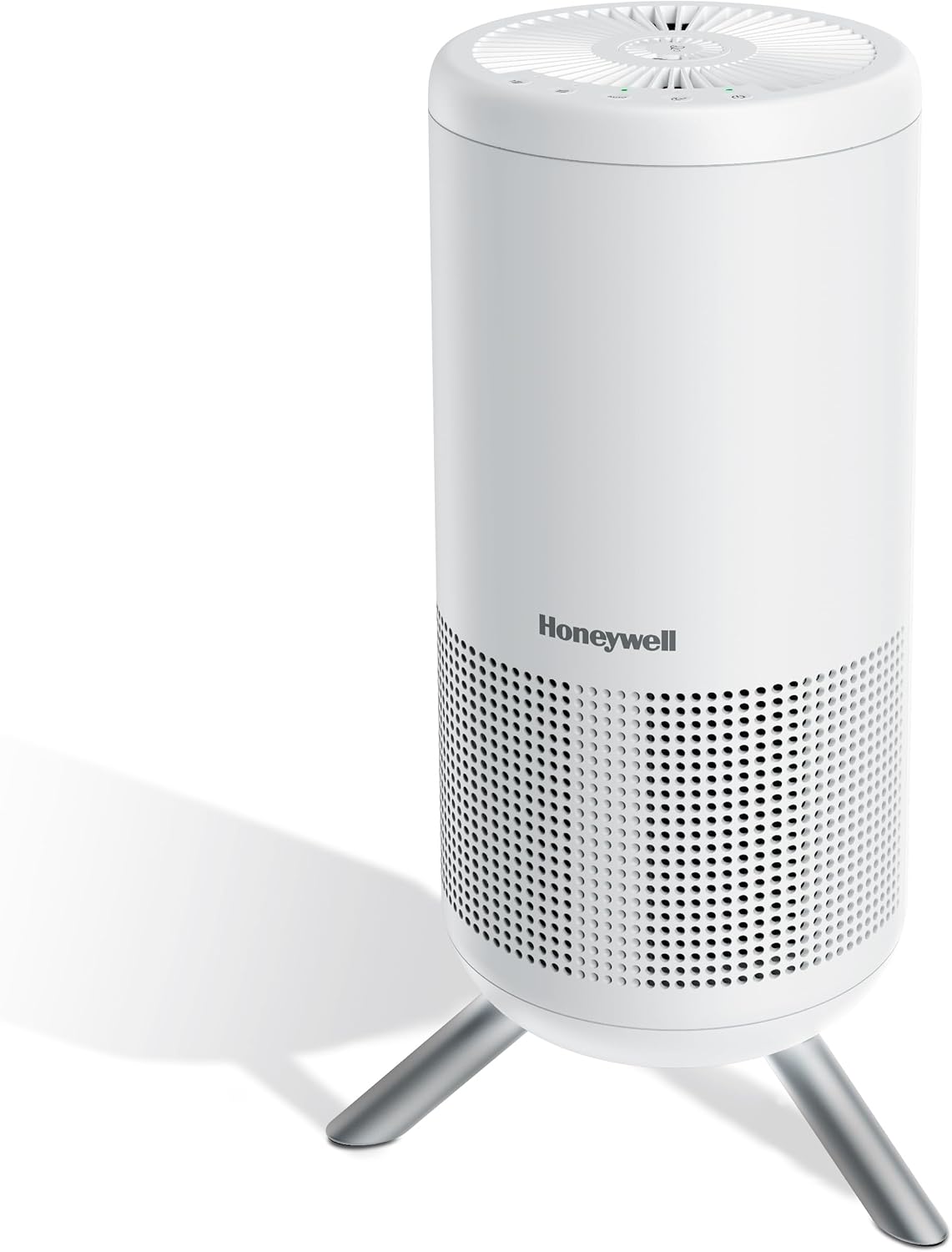
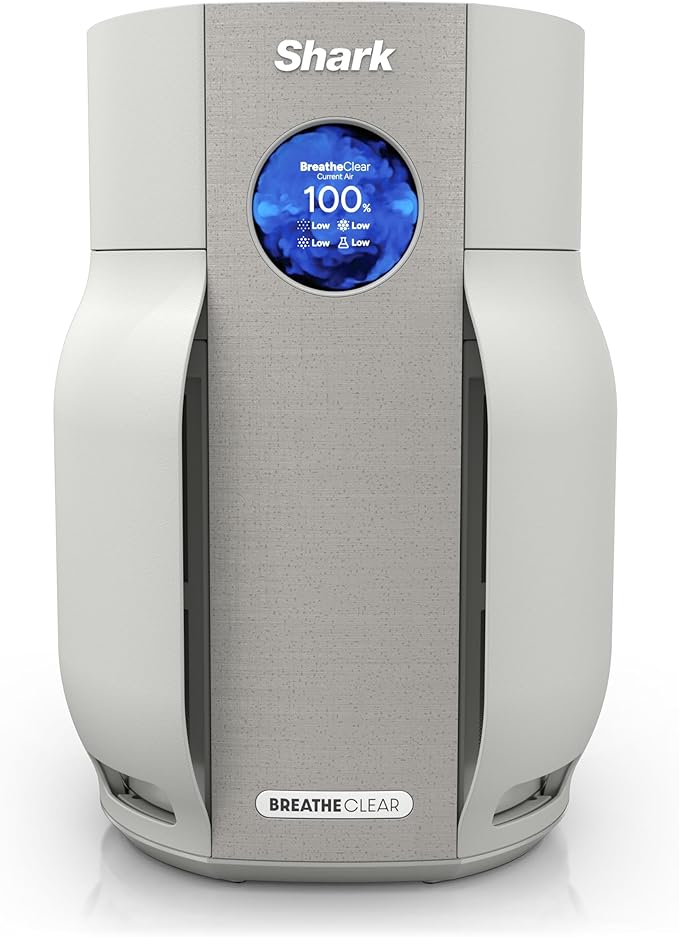
Shark BreatheClear NeverChange Intelligent Air Purifier
The pitch here is the five-year filter, which matters if your closet purifier is going to live on a high shelf or wedged behind shoe storage where you will never want to swap a cartridge. Shark's intelligent mode auto-adjusts based on a particulate sensor — useful in a closet because every time you change clothes or pull a coat off a hanger you spike PM2.5 for 30 seconds. It will ramp briefly, then drop back to sleep mode. Just verify in your testing that the ramp-up does not catch a take. View on Amazon.
Comparison table
| Model | Coverage | Filter | Best for closet podcasters who… |
|---|---|---|---|
| Medify MA-25 (reference) | 500 sq ft | H13 HEPA + carbon | have a sealed 30–60 sq ft walk-in |
| LEVOIT Large Room 1875 | 1875 sq ft | 3-stage HEPA | cannot seal closet from adjoining bedroom |
| WINIX 5510 | ~360 sq ft | 4-stage HEPA + AOC + PlasmaWave | want app control between takes |
| Shark BreatheClear NeverChange | ~500 sq ft | 5-year cartridge HEPA | want zero filter maintenance |
Noise floor: the only spec that matters during a take
Podcast condenser mics typically have self-noise between 7 and 16 dBA. A purifier at 30 dB at one meter sounds inaudible in a normal room but can still appear on a waveform with -50 dBFS gain and aggressive noise suppression in post. The way to test it: record 60 seconds of room tone with the purifier off, then 60 seconds with it on speed 1, then run both through your normal post chain (de-noise, EQ, normalize). If the “purifier on” room tone has audibly more hiss after processing, drop the unit further from the mic or rotate the exhaust toward soft goods.
The Medify MA-25 has a clear advantage here over larger units precisely because its smallest fan blade moves the least air per revolution, which means lower-frequency content in the exhaust noise. Lower-frequency hum is easier to remove in post than the broadband whoosh of a larger unit. If you have ever tried to de-noise a big tower purifier from a take, you know — high-frequency turbulence eats your sibilance when you process it out.
Setup tips for closet podcasters
Run the purifier 30–45 minutes before recording on its highest setting to clear baseline particulate, then drop to speed 1 five minutes before the first take. Place the unit on the floor, not at head height — exhaust at head height creates a direct path to the mic capsule even if it is “behind” you, because closet walls reflect everything. Keep at least 3 feet between the unit and the mic stand, and put a soft good (jacket, blanket) between them if you can.
If your closet doubles as wardrobe storage with dry-cleaned items, prioritize a unit with real carbon weight, not just a thin sheet — outgassing perchloroethylene is one of the more common causes of “I felt fine before recording but now my throat is raw” complaints from closet podcasters. The MA-25's carbon layer is adequate but not exceptional; if you are recording four-hour episodes, step up to a unit with a half-inch-plus carbon bed.
For more on quiet operation, see our guide to the quietest air purifiers for voiceover booths, and for sizing decisions in tight spaces, our picks for rooms under 100 sq ft. If you are comparing within the Medify line specifically, we cover the smaller-room alternative in our MA-25 vs MA-14 breakdown.
Frequently Asked Questions
Is the Medify MA-25 quiet enough to leave running during podcast recording?
On speed 1, the MA-25 measures 30 dB at one meter in an anechoic spec test, and in a soft-goods-saturated walk-in closet the practical noise at the mic position is typically 24–27 dB after closet absorption. That is below the self-noise of most podcast condensers, so leaving it running through takes is usually fine. Verify with a 60-second room tone test through your post chain before committing.
What size air purifier do I need for a 50 sq ft walk-in closet podcast booth?
You want at least 4 air changes per hour, which for a 50 sq ft, 8-foot ceiling closet means a CADR of about 27 cfm minimum. Practically, any unit rated for 150+ sq ft of single-air-change coverage will hit that easily on its lowest speed. The MA-25's 232 smoke CADR is significantly oversized, which is what lets you run it whisper-quiet.
Will running an air purifier in a closet help with CO2 buildup during long recording sessions?
No — HEPA purifiers filter particulate, they do not exchange air with the outside. For CO2 management you need either the closet door cracked, a vent fan, or scheduled breaks. A purifier helps the particulate side of “stale air” but not the CO2 side. Many closet podcasters install a small inline duct booster to a hallway vent for this reason.
Does the Medify MA-25 emit ozone or use ionization?
No — the MA-25 is a pure HEPA-plus-carbon filtration unit with no ionizer, no UV, and no ozone generation. This matters for podcasters because corona discharge from ionizers can occasionally couple into high-gain condenser preamps as a faint hiss or tick. The MA-25 is electrically silent in that regard, which is the main reason the Medify MA-25 for podcasters recording in untreated walk-in closets keeps surfacing in audio engineer recommendations.
How often do I need to replace the MA-25 filter in a closet recording setup?
Medify recommends 3–4 months under normal home use. In a closet podcast setup, fiber shed from clothes loads the pre-filter faster than average, so plan on every 2–3 months. You can vacuum the pre-filter monthly to extend HEPA life. If you want zero maintenance, look at the Shark BreatheClear NeverChange instead, which uses a 5-year cartridge design.
Can I use a larger air purifier on its lowest setting instead of the MA-25?
Yes, and it is often quieter at the mic. A larger unit's lowest speed moves the same or more air than the MA-25's medium speed, but with a slower-spinning fan that produces lower-frequency, easier-to-de-noise exhaust. The trade-off is footprint — the LEVOIT 1875 sq ft unit is about 14 inches square at the base versus the MA-25's 10-inch round base, which matters in a packed closet.
Should I turn the air purifier off during the actual recording for the cleanest audio?
Generally no. Powering it off lets dust resettle within 5–10 minutes, and dust on a mic capsule or in your breathing zone causes mid-take throat clears that are worse than any trace fan noise. The exception is ultra-high-fidelity ASMR or audiobook narration where you are targeting a -60 dBFS noise floor — in that niche, kill the purifier 30 seconds before record and accept the dust trade. For everyone else evaluating the Medify MA-25 for podcasters recording in untreated walk-in closets, leaving it on speed 1 through the take is the right call. See our 2026 round-up of HEPA picks for home recording studios for broader category comparisons.
Key Takeaways
- Choosing the right medify ma-25 for podcasters recording in untreated walk-in closets means matching capacity and output ports to your actual devices
- Always check actual watt-hours (Wh), not just watts — runtime depends on Wh, not peak output
- Also covers: medify ma-25 podcast closet booth air purifier
- Also covers: quiet air purifier podcasters closet recording
- Also covers: medify ma-25 untreated closet voice booth
- Compare price-per-Wh across models to find the best value for your budget