For shark hp102 vs levoit core mini for rv and travel trailer living, the short answer in 2026 is this: the Levoit Core Mini wins on power draw (about 7W vs the HP102's 12-14W), weight, and price, while the Shark HP102 covers nearly double the square footage and uses a true HEPA plus activated carbon stack that handles cooking smoke, holding-tank vent gases, and campfire haze far better. For a 20-30 ft travel trailer parked most nights, the Levoit Core Mini is enough. For Class A or Class C rigs over 30 ft, full-timers, or anyone boondocking with a propane fridge and gas range, the Shark HP102 is the more honest fit.
Why RV and travel trailer air is worse than you think
An RV is essentially a small, poorly ventilated box on wheels that sits over a holding tank, next to a propane combustion appliance, and downwind of a campfire roughly half the nights you use it. The cubic footage inside a 26 ft travel trailer is around 1,800-2,200 cu ft, so any pollutant that enters concentrates fast. Cooking a single skillet of bacon can push PM2.5 readings past 300 µg/m³ in under three minutes, which is well into "hazardous" territory on the AQI scale. Add wildfire smoke season across the western U.S., dust from gravel sites, mold spores from damp slide-out seals, and dander from the dog that lives 18 inches from your pillow, and the case for a dedicated HEPA purifier writes itself.
When shopping for shark hp102 vs levoit core mini for rv and travel trailer living, it pays to compare specs, capacity, and real-world runtime before committing.
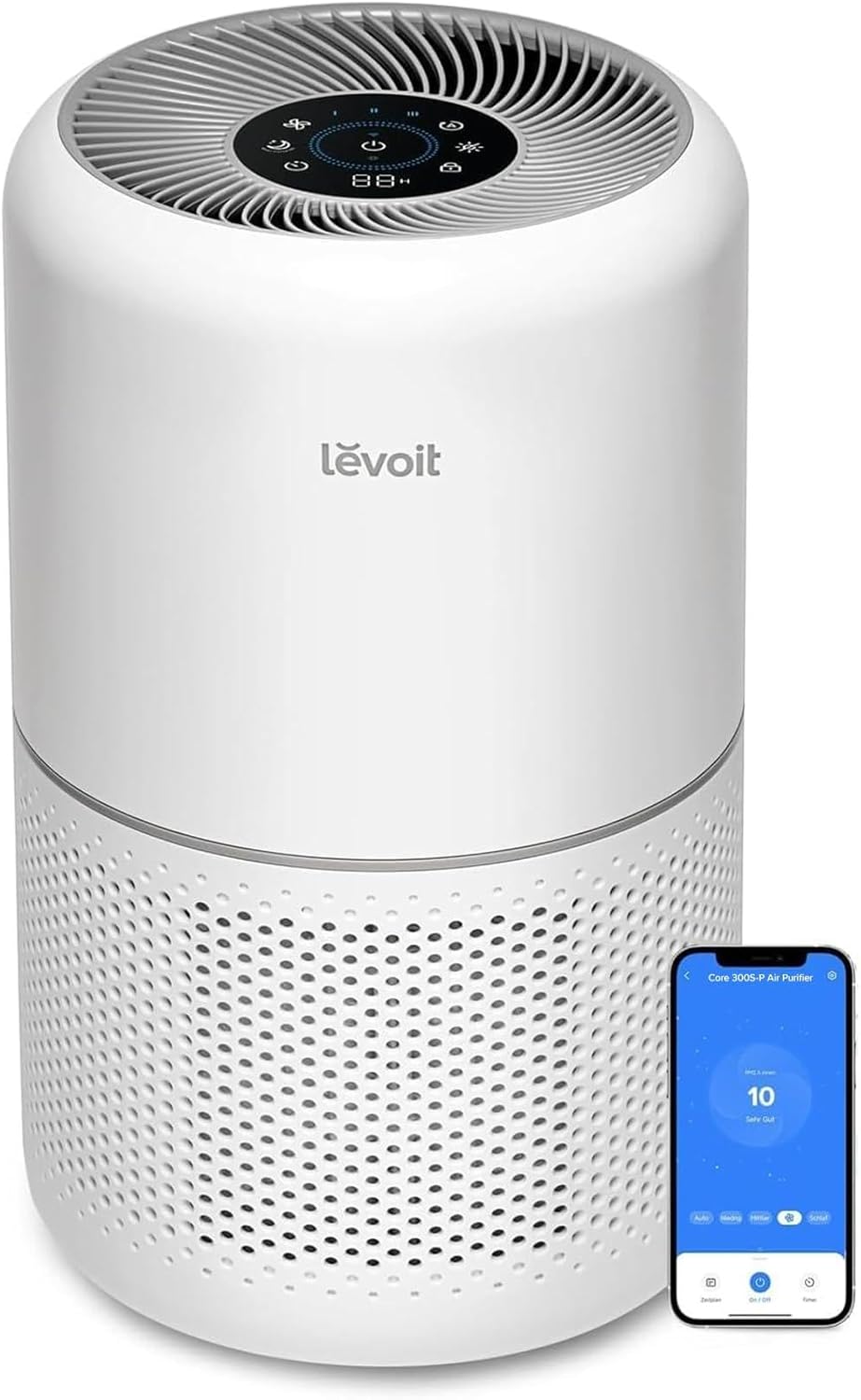
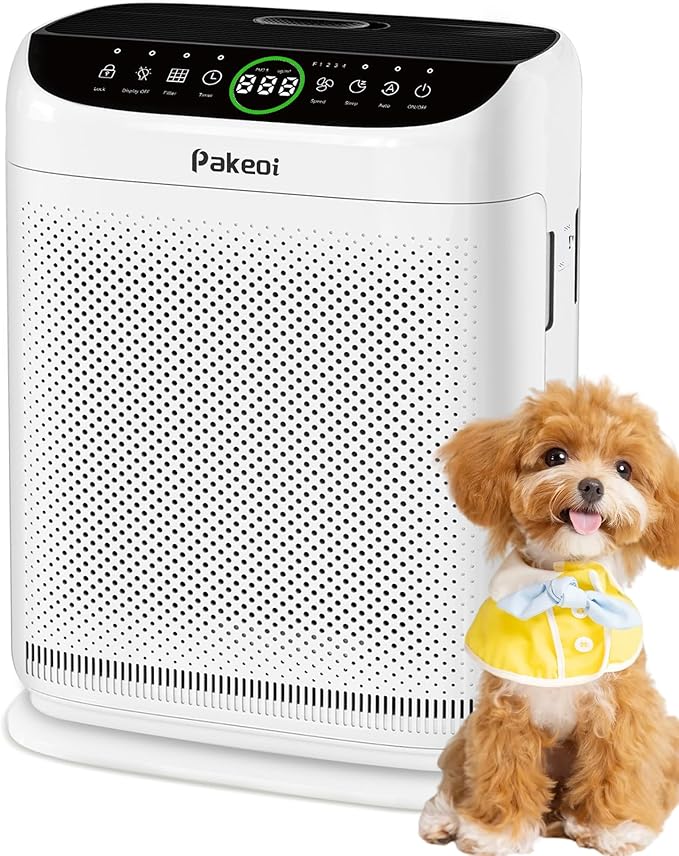
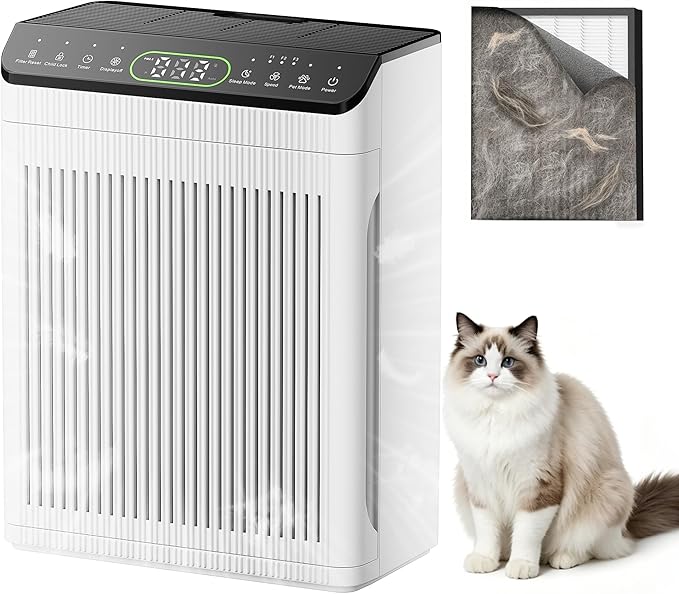
The two units RVers ask about most are the Shark HP102 and the Levoit Core Mini, because they hit the sweet spot of compact footprint, true HEPA, and reasonable price. Both are 120V AC units, both fit on a dinette table or a bedroom nightstand, and both are cheap enough that losing one to road vibration on a rough Forest Service road isn't a wallet event.
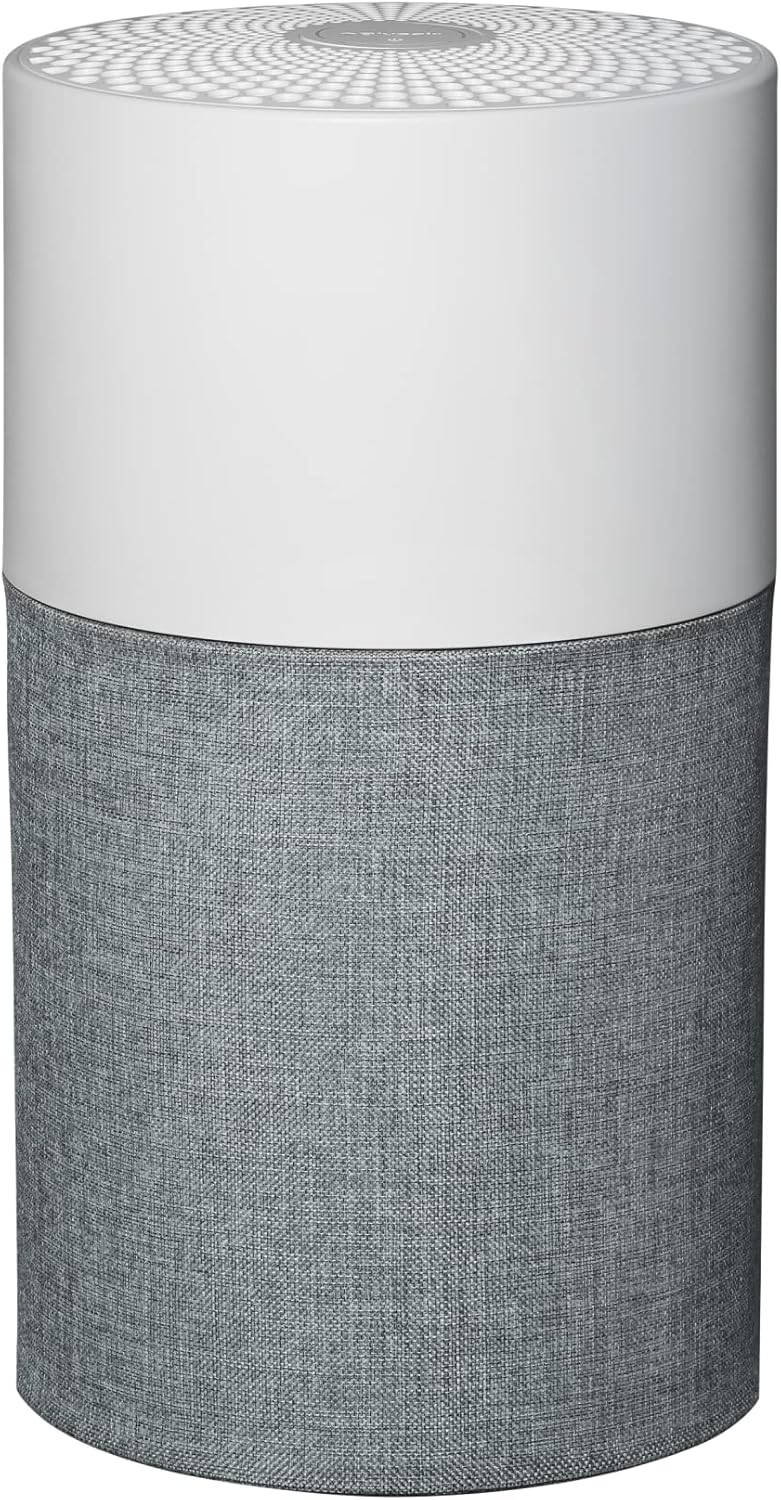
Spec-by-spec comparison for RV and travel trailer living
| Spec | Shark HP102 | Levoit Core Mini | Notes for RV use |
|---|---|---|---|
| Coverage (CADR-based) | ~200 sq ft | ~178 sq ft (mfr.) / ~95 sq ft realistic | Most travel trailers are 150-300 sq ft of usable interior |
| Filter type | True HEPA + activated carbon | 3-in-1: pre-filter, HEPA, carbon | Both filter VOCs and PM2.5 |
| Power draw (max) | ~14 W | ~7 W | Mini runs all night on a 100Ah battery without inverter strain |
| Noise (low / high) | ~25 / ~52 dB | ~25 / ~48 dB | Both are fine on low for sleep |
| Weight | ~4.4 lb | ~2.3 lb | Mini stores in a cabinet during travel |
| Height | ~12 in | ~10.4 in | Both fit under most RV countertops |
| Replacement filter cost (2026) | ~$30 every 6 mo | ~$15 every 6-8 mo | Levoit cheaper, Shark filters last slightly longer |
| Aromatherapy / scent pad | No | Yes | Useful for masking gray tank odors |
| Price (2026) | ~$100 | ~$50 | Mini is hard to beat at this price |
Shark HP102: the better choice for full-timers and larger rigs
The Shark HP102 is a 4-stage unit (mesh pre-filter, anti-microbial mesh, true HEPA, activated carbon) in a footprint about the size of a 64 oz Yeti Rambler. In a 26 ft travel trailer it can pull PM2.5 from 300 µg/m³ back down to under 12 µg/m³ in roughly 18 minutes on high, which is the kind of performance you need if you cook inside. The activated carbon layer matters more in an RV than it does in a house because you live so close to your kitchen, your bathroom, and your sewer hose connection. A house can dilute odors across 2,000 sq ft; an RV cannot.
Downsides for RV life: it pulls ~14W, which over an 8-hour night on inverter is about 130 Wh, roughly 11Ah from a 12V battery bank. If you're plugged into shore power that's nothing. If you're boondocking, it's noticeable. It also weighs over 4 lb and has a top-discharge design that you have to remember to tip-secure during travel.
Levoit Core Mini: the better choice for weekenders and small trailers
The Core Mini is a 3-in-1 (pre-filter, HEPA, carbon) cylinder roughly the size of a 1L Nalgene. It draws only 7W, which is the lowest of any name-brand HEPA on the market in 2026, and the published 25 dB low-speed reading is genuinely whisper-quiet. The aromatherapy pad on top lets you drop a few drops of essential oil to mask the gray-tank smell during a long travel day, which sounds gimmicky until you've spent three days in a popup in August.
The honest weakness is coverage. Levoit advertises ~178 sq ft but the realistic ACH-based number is closer to 95 sq ft of effective continuous cleaning. In a 20 ft trailer that's fine. In a 32 ft fifth-wheel it's not. If your rig is larger than a Casita or a small travel trailer, the Mini will be working at 100% most of the time, which negates its noise advantage.
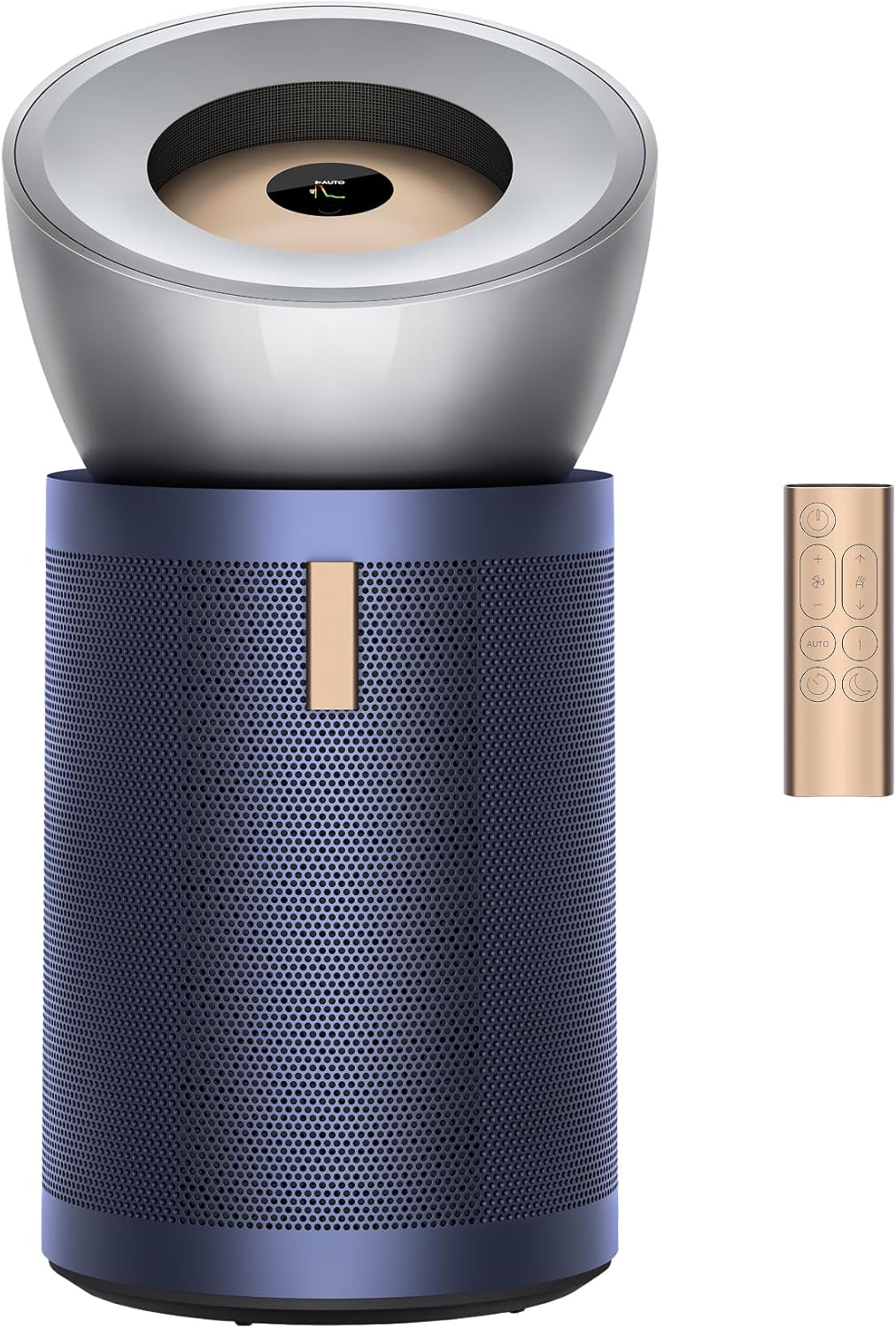
Better picks if you want to step up from either of these
Both the HP102 and the Core Mini are good but not exceptional. If you live in your rig full-time, or you're parked on a seasonal site where you have shore power year-round, these four units are worth a hard look. They cost more but each one solves a specific RV problem the HP102 and Core Mini cannot.
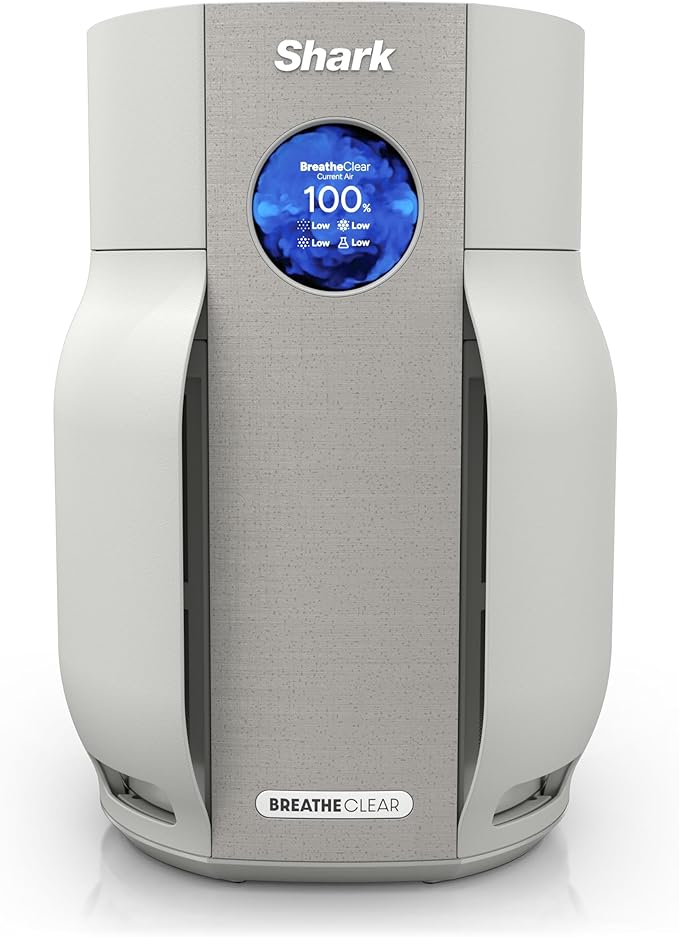
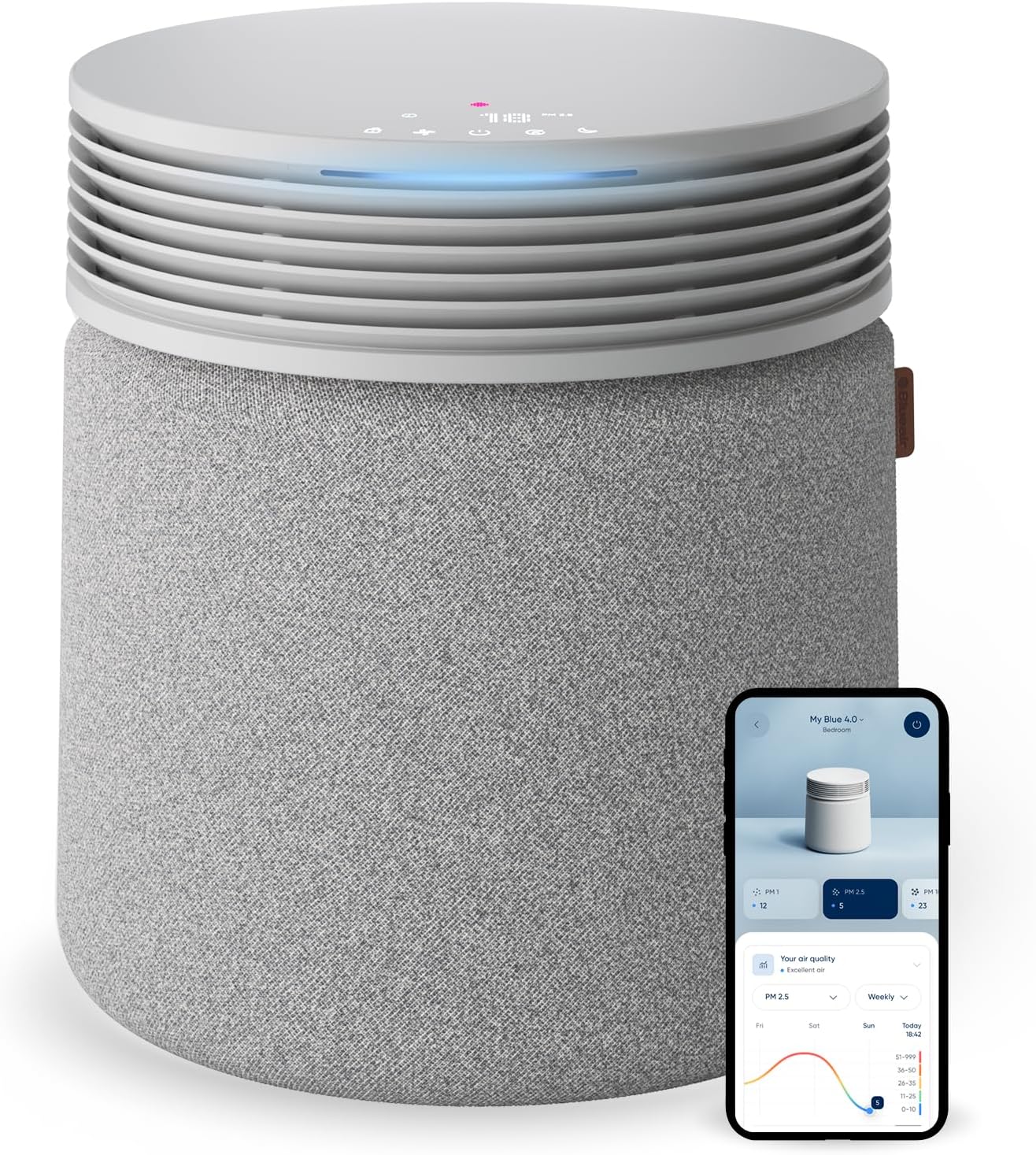
Shark BreatheClear NeverChange Intelligent Air Purifier — best for full-timers tired of buying filters
The Shark BreatheClear's headline feature is the NeverChange filter design that Shark rates for five years of continuous use, which over the life of an RV easily saves $200-300 in replacement filters and a lot of trips to Amazon while you're at a campground without 1-day shipping. It pairs with the SharkClean app so you can monitor PM2.5 from your phone, which matters when you're outside grilling and want to know if it's safe to come back inside. The build is heavier than the HP102, so you'll want to strap it during travel, but if your rig is parked half the year on a seasonal site, this is the smarter long-term buy. Check the Shark BreatheClear NeverChange on Amazon.
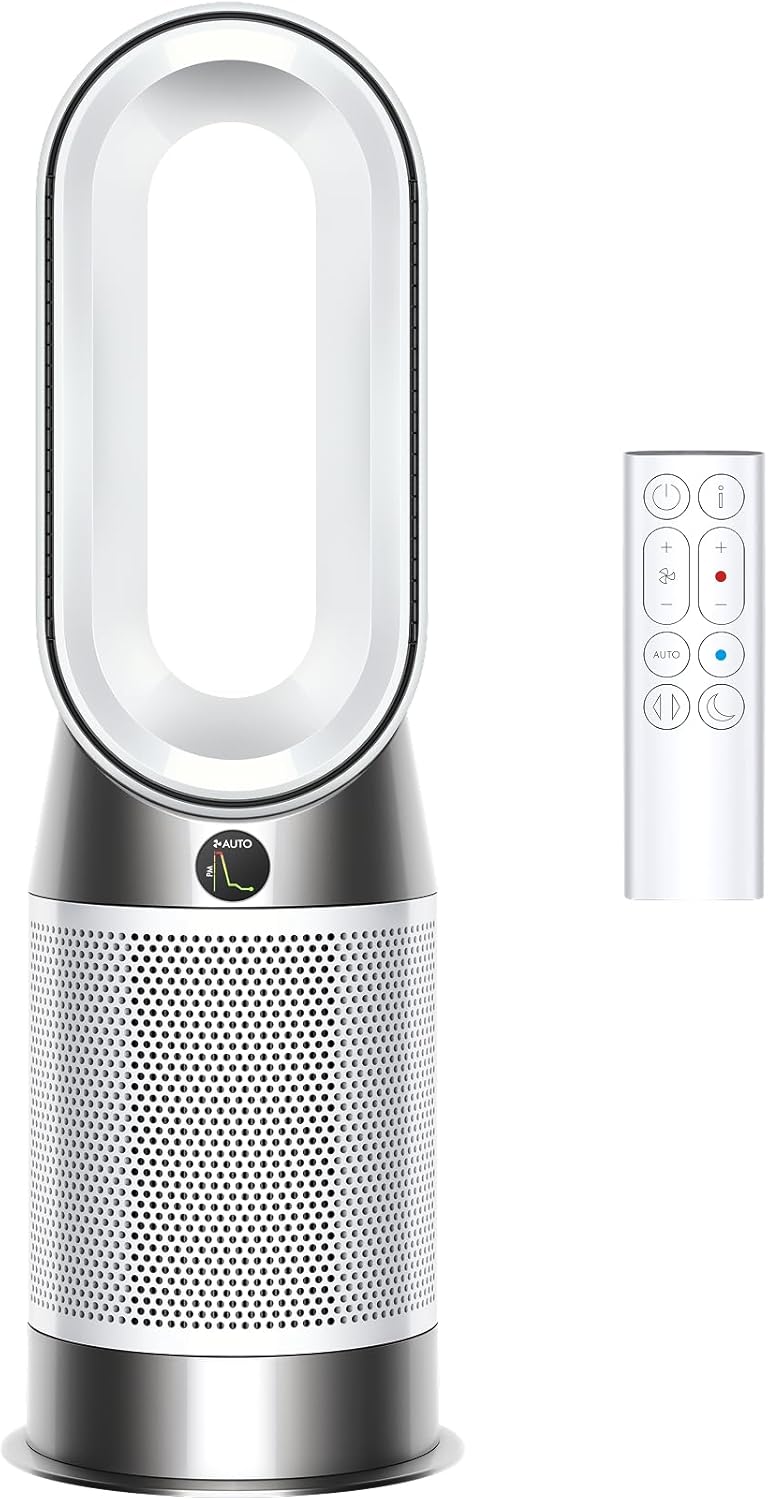
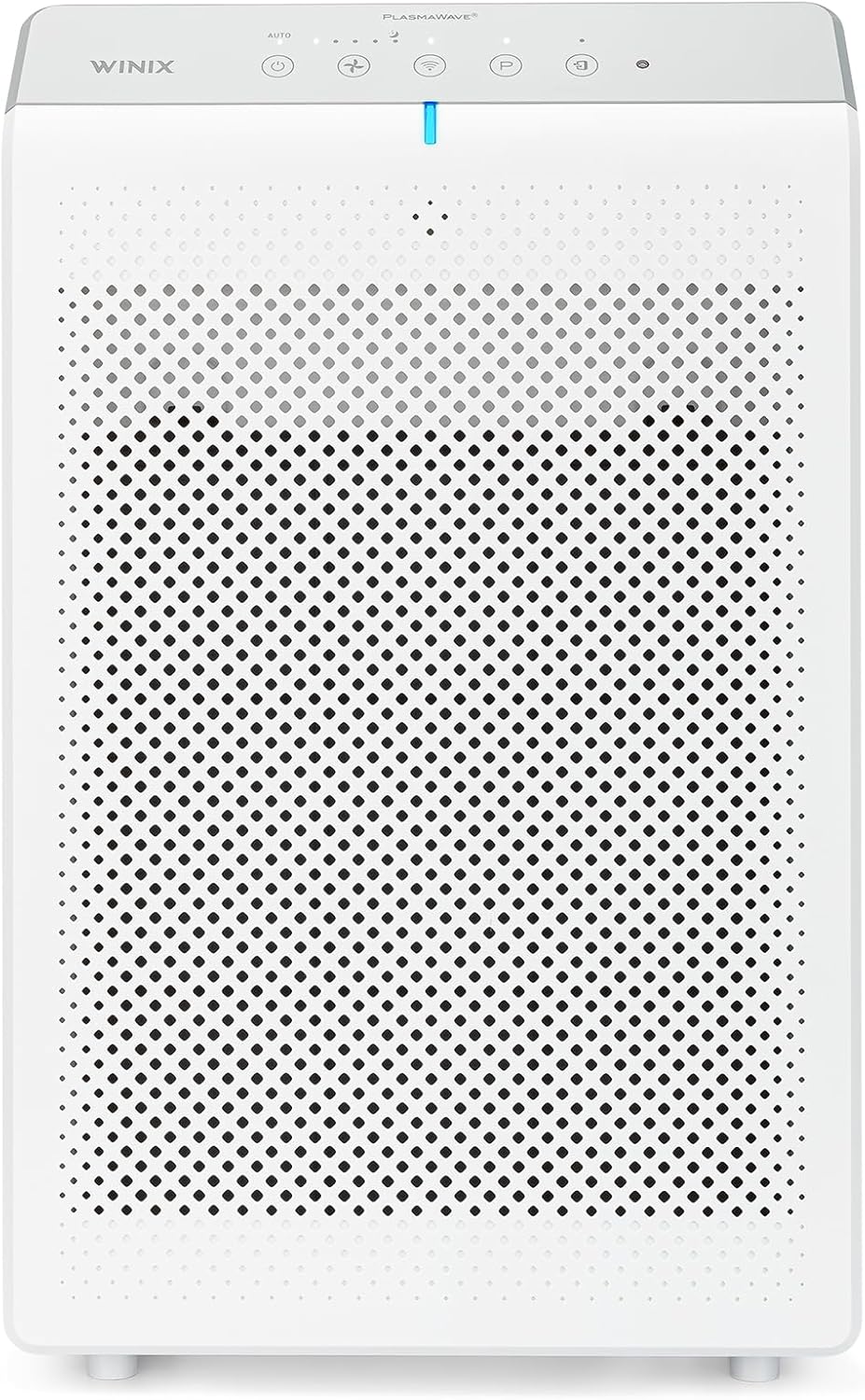
WINIX 5510 Air Purifier with App Support — best mid-size for fifth-wheels and Class A rigs
The WINIX 5510 is the successor to the much-loved 5500-2, with the same true HEPA, activated carbon, and PlasmaWave ionization stack, plus Wi-Fi and app monitoring added. It handles up to ~360 sq ft, which covers the main living area of almost any RV under 40 ft. The smart sensor automatically ramps fan speed when it detects cooking smoke or pet dander, which is exactly the behavior you want in an RV where the air quality changes every time someone opens the door. The downside is power draw (~70W on high) and a footprint that takes a permanent spot in the living area. Check the WINIX 5510 on Amazon.
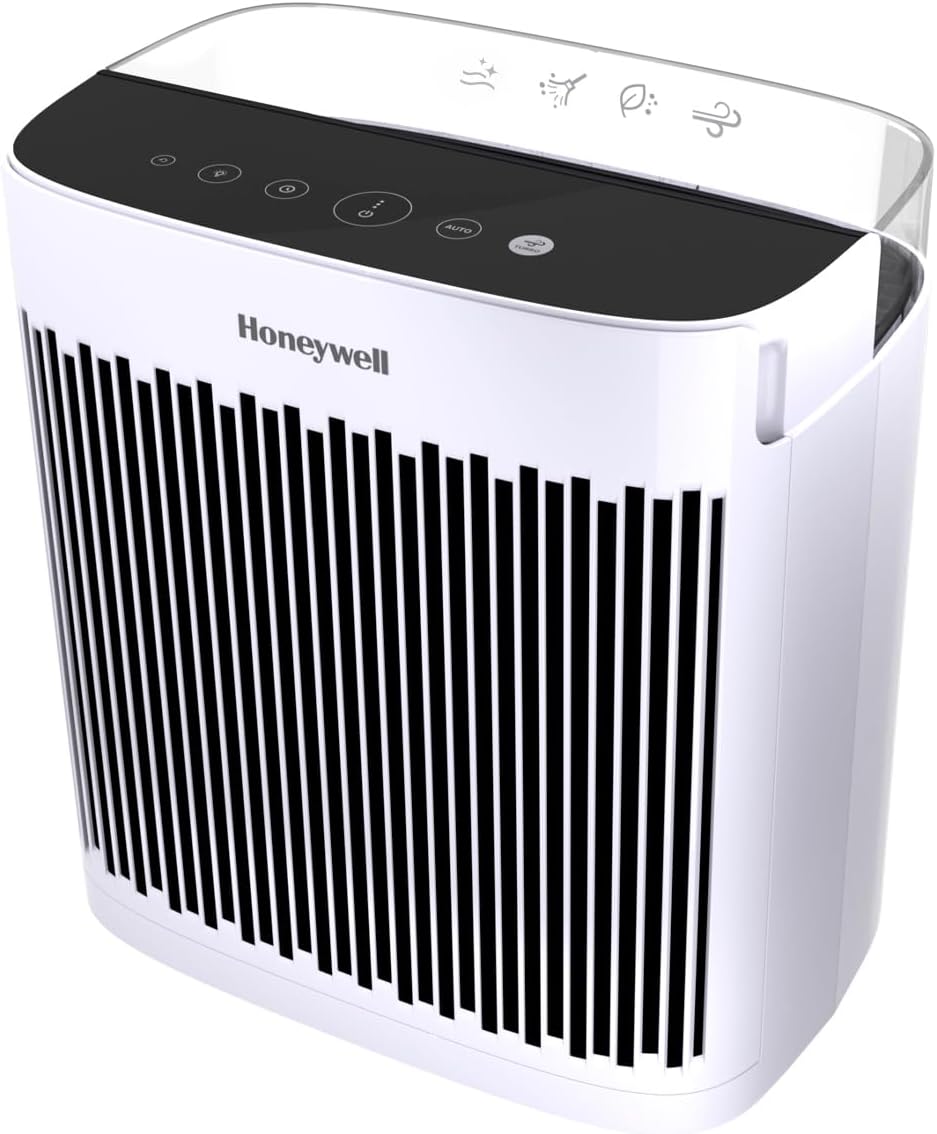
LEVOIT Air Purifier for Home Large Room up to 1875 Ft² — best for park-model RVs and seasonal sites
If you live in a park-model RV or have a destination trailer parked on a permanent lot, you don't need a compact unit. You need real coverage. The LEVOIT large-room unit covers up to 1875 sq ft (5 ACH in a 375 sq ft space), runs on 23dB on sleep mode, and has app-based smart-home integration. It's the closest thing to a residential air purifier that still makes sense in an RV. Check the Levoit large-room model on Amazon.
EVALIT Air Purifier for Home Large Room up to 2200 Ft² — best for wildfire smoke season
If you camp anywhere west of Denver between July and October, wildfire smoke is the dominant air-quality threat, and the smoke load can spike to AQI 400+ within a few hours of an upwind ignition. The EVALIT's 2200 sq ft coverage gives you enough overhead capacity to bring a smoke-flooded RV back to safe PM2.5 levels in 10-15 minutes on high. It's overkill for a 20 ft trailer in normal conditions, which is the point. Check the EVALIT large-room purifier on Amazon.
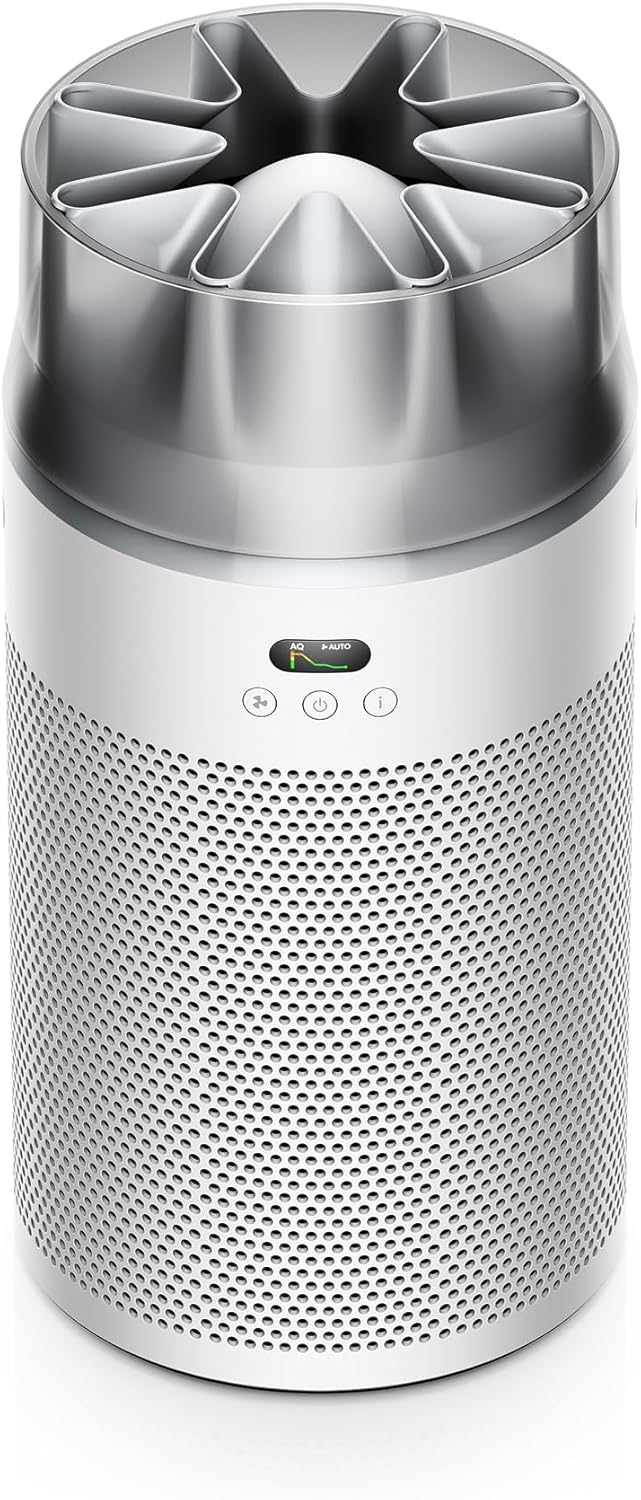
Air Purifier for Large Room up to 3000 Ft², Double Air Intake — best for combined RV plus outdoor patio
For seasonal sites with a covered patio where you spend half your evening, a 3000 sq ft double-intake unit pulls air from both sides of the cabinet and can effectively buffer both interior and a partially enclosed outdoor space. It's a niche use case, but for park-model RVers with a screened porch this is the one. Check the 3000 sq ft dual-intake purifier on Amazon.
Filter cost over 12 months on the road
This is where the math actually matters for RV life. The Shark HP102 takes a proprietary filter at roughly $30 every six months, so $60/year. The Levoit Core Mini's filter runs roughly $15 every six to eight months, so $20-30/year. Over a five-year RV ownership window that's $300 vs $125, plus shipping delays when you're parked in a place Amazon Prime considers "remote." If you spend any meaningful time in places like the Olympic Peninsula, Big Bend, or rural Maine, factor that in. The NeverChange BreatheClear listed above sidesteps this entirely.
Power draw, 12V systems, and inverter compatibility
Neither the HP102 nor the Core Mini is a 12V native unit. Both require a pure sine wave inverter, which any modern RV with a residential refrigerator already has. The Core Mini at 7W is essentially free on an inverter — you'd run it 24/7 on a 100Ah lithium battery and barely notice. The HP102 at 14W is still negligible on shore power but adds up to about 340 Wh per day if you leave it running full-time, which is roughly 28Ah on a 12V system. With a 200W solar array and 200Ah of lithium, that's still fine; with a single 100W panel and a flooded battery, it's not.
For van-lifers and Class B owners specifically, see our companion guide on the best 12V-native air purifiers for van life — that's a different category and neither the HP102 nor the Core Mini is the right answer there.
Noise at night in a tight space
The HP102 on low is rated 25 dB but realistically reads closer to 32 dB on a phone meter, which in the dead silence of a national forest campground is noticeable. The Core Mini on low is genuinely 25 dB and disappears into the background. If you're a light sleeper and your bedroom in the rig is 7 ft from the purifier, this difference matters more than the spec sheets suggest. For comparison shopping on quiet operation specifically, see our quietest bedroom HEPA purifiers roundup.
Frequently Asked Questions
Can the Shark HP102 or Levoit Core Mini run while the RV is in motion?
Technically yes if you have an inverter feeding the outlets while driving, but neither manufacturer recommends it. Vibration on a rough road can dislodge the HEPA filter from its seal, and the units aren't designed to be stable on a moving surface. Run them at the campsite, not on the highway.
Which is better for pet dander in a small travel trailer?
Either works, but the Shark HP102's larger CADR clears a 200 sq ft space about 40% faster than the Core Mini, which matters if your dog sheds heavily. The Core Mini will keep up over time but the HP102 catches up faster after a fresh shed event. For multi-pet households also look at the best HEPA purifiers for pet odors and dander.
Will either unit handle wildfire smoke in a 28 ft fifth-wheel?
The Core Mini will struggle — it's undersized for that volume during a true smoke event. The HP102 will keep up if smoke load is moderate (AQI under 200), but during a severe smoke event you want something with 3-5x the CADR. The EVALIT 2200 sq ft unit linked above is the smarter buy if you camp in fire-prone regions.
Are the replacement filters easy to find at Camping World or Walmart?
No. Both are Amazon-primary supply chains. Order two spare filters before you leave on a long trip. For the HP102 in particular, the proprietary cartridge is not stocked at any brick-and-mortar RV supplier we've found.
Does either purifier remove propane combustion byproducts from a gas range or furnace?
Partially. Activated carbon adsorbs some VOCs and combustion residue but cannot remove carbon monoxide or nitrogen dioxide. You still need a working CO detector and good ventilation while cooking. Treat the purifier as PM2.5 and odor control, not as a combustion safety device.
How long do the filters actually last in dusty boondocking conditions?
Manufacturer ratings (6-8 months) assume residential indoor air. In dusty boondocking conditions — dry camping in the desert, gravel pads, dirt-road access — filter life drops by 40-50%. Plan to change the HP102 filter every 3-4 months and the Core Mini filter every 4-5 months under those conditions, and inspect the pre-filter monthly.
Is the Levoit Core 300 a better RV choice than the Core Mini?
For most RVs over 20 ft, yes. The Core 300 has roughly 2.5x the CADR for about 1.5x the price and 1.4x the power draw, which is a better value if your rig is large enough to need it. We break it down in detail in our Levoit Core 300 vs Core Mini comparison.
Final verdict on shark hp102 vs levoit core mini for rv and travel trailer living
If your rig is under 24 ft, you camp on weekends, and you want the lowest power draw and lowest filter cost, buy the Levoit Core Mini. If your rig is 24-32 ft, you cook inside regularly, you have a dog, or you're a full-timer, buy the Shark HP102. If neither feels right because you're parked on a seasonal site or you face wildfire smoke, skip both and buy the Shark BreatheClear NeverChange or the EVALIT 2200 sq ft unit linked above — they're a meaningfully better answer for those specific use cases.
Key Takeaways
- Choosing the right shark hp102 vs levoit core mini for rv and travel trailer living means matching capacity and output ports to your actual devices
- Always check actual watt-hours (Wh), not just watts — runtime depends on Wh, not peak output
- Also covers: shark hp102 vs levoit mini rv
- Also covers: best 12v compatible purifier travel trailer
- Also covers: shark nanoseal rv full time living
- Compare price-per-Wh across models to find the best value for your budget